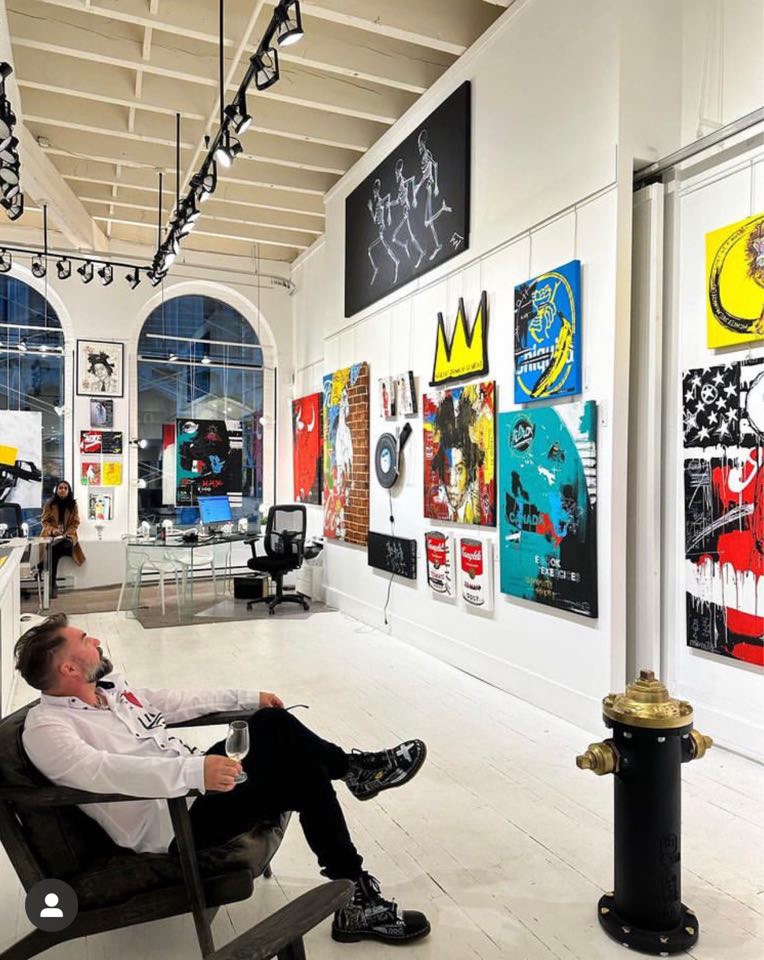
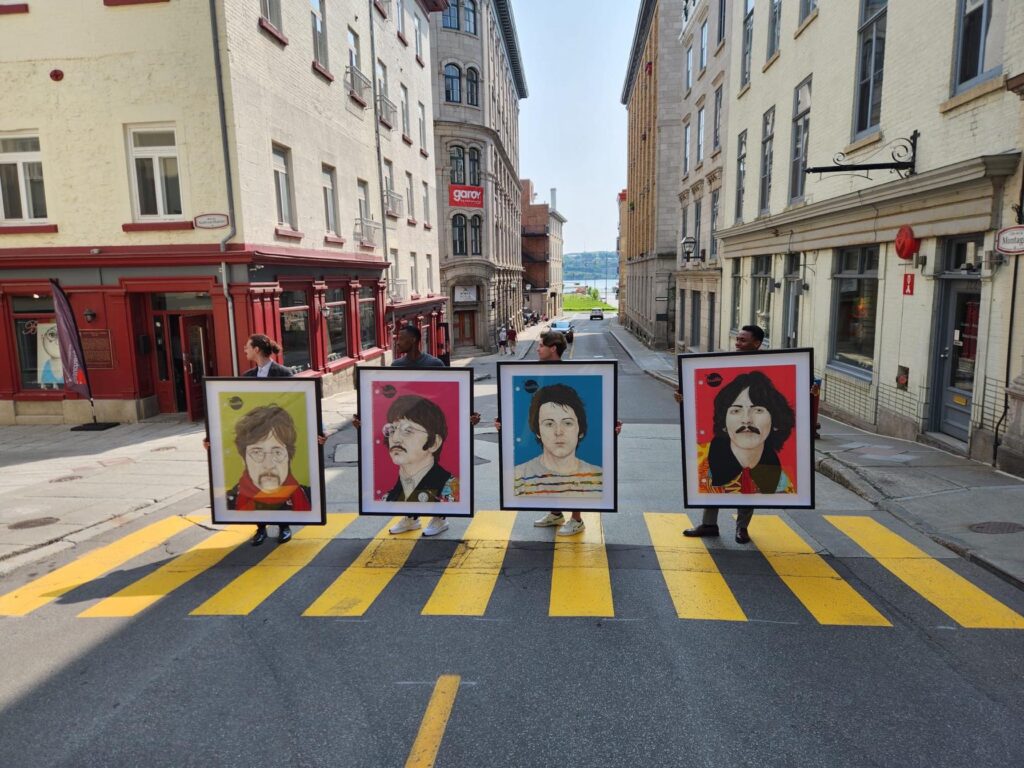
Quebec artist Sébastien Larochelle spoke with us about his early “dripping” technique, equine work, international exposure, the Istaymute project and the music that shapes his process.
Knowing art would remain part of his life
“Since the first time I drew something that looked like what I wanted to represent, I knew that art would be a part of my life.”
Larochelle first imagined work as a graphic designer or art teacher. After moving from Abitibi to Montréal to study art, he developed a “dripping” approach: liquid paint used in quick gestures to draw bodies and animals against industrially inspired backgrounds.
The move from studio to gallery
While working at a record store on Montréal’s Mont-Royal Street, a customer saw his paintings and showed photographs to a gallery owner. His work moved from the university studio into a professional gallery, and one early piece was sold to South Korea.
“It’s exciting to know that my work travels to other countries and is appreciated worldwide, but it also feels abstract. I don’t see my work in those places, nor do I see the people who admire it. I believe that keeps me grounded.”
Equus Libertas and Cavalia
His solo exhibition Equus Libertas marked the height of his equine period, with oversized works exploring the freedom, speed and power of horses. The exhibition led to new gallery relationships and a collaboration with Cavalia, whose traveling gallery brought the work to audiences in the United States, Europe, Asia and Australia.
Why he changed direction
After fifteen years focused on equine subjects, Larochelle felt repetition would lead to stagnation.
“I could have pursued, repeated, and done the same thing over and over, but that would have been lying to myself, and I would have somehow ‘depérir’.”
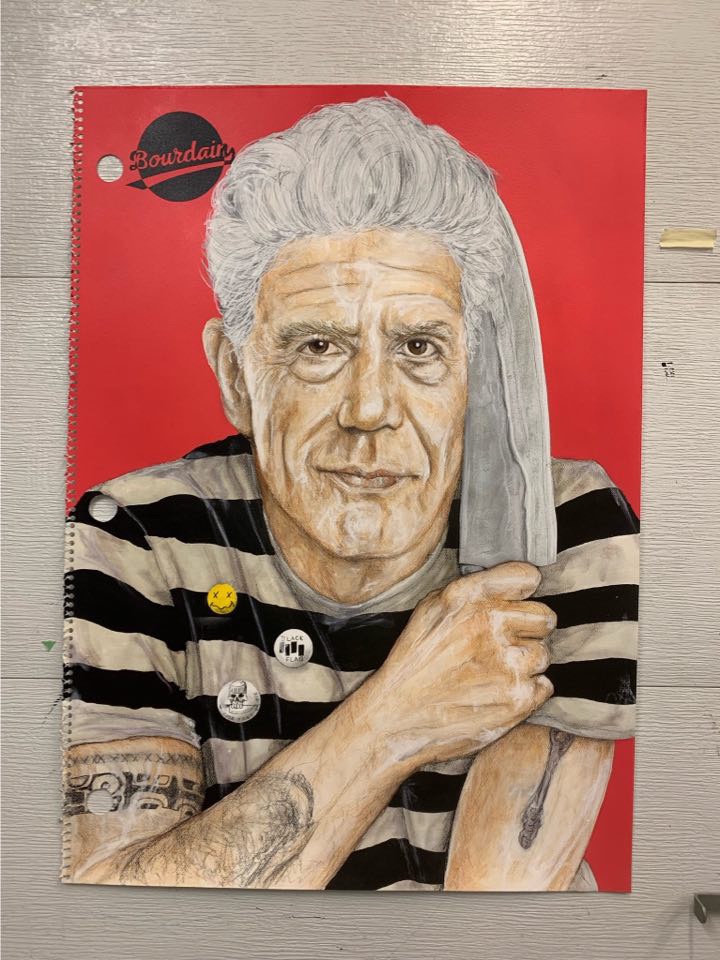
That search led to Istaymute, beginning with a portrait of Jean-Michel Basquiat. The project combines hyperreal portraiture with simpler marks, lined-paper references, oxidation, deterioration and graffiti.
The meaning of Istaymute
“Firstly, I wanted to separate my previous work from my current art, as it is influenced in part by street art. I was a fan of music and Depeche Mode during my fifteen years as a record store owner. I liked the logo of their record company, Mute Records. So, I chose Istaymute as a name, and for me, it’s my art that speaks, not me – I remain mute.”
Music in the studio
Music guides the rhythm of Larochelle’s painting. The genre changes with the subject, from classical and electronic music to heavy metal and jazz; at the time of our interview, bebop was a strong influence.
Following the work today
This interview captures Larochelle explaining the transition in his own words. For current work, exhibitions and contact information, use the artist’s official Istaymute website. Galerie 203 also has an artist profile that distinguishes his equine practice from the pop-inflected Istaymute work.
Those current sources complement the interview rather than replacing it: the value here is the artist’s first-hand explanation of why he changed direction and how music enters his studio process.
Larochelle’s current official biography still separates the Istaymute project from his equine work. It describes Istaymute as “Pop Trash Art” built from 1980s and 1990s popular culture, music, film and everyday objects, with wear, oxidation and graffiti used as visual ideas. That makes the transition described in this interview easier to understand: it was not simply a new subject, but a deliberate break into a different visual language.
For more cultural stops, see our Quebec City museum guide.
For another first-hand conversation with a Quebec City painter, read our Emilie Gosselin interview.
Discover more from Quebec City 101
Subscribe to get the latest posts sent to your email.