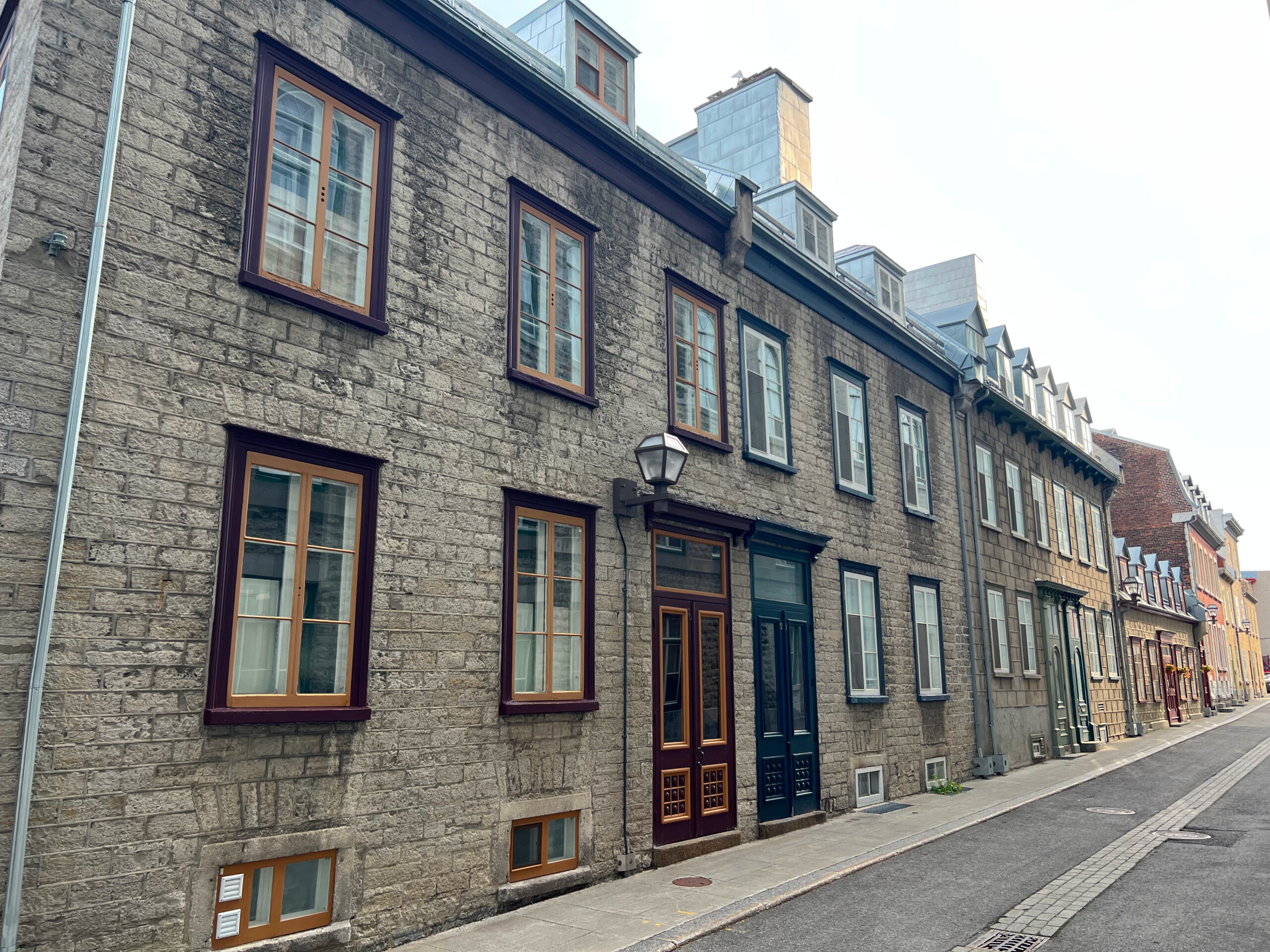
Old Quebec is more than a collection of photogenic streets. Its combination of surviving fortifications, a living historic district and dramatic geography helped earn the Historic District of Old Québec a place on UNESCO’s World Heritage List in 1985.
The fortifications still shape the city
Quebec preserved its ramparts, gates, bastions and other defensive works to a degree unmatched elsewhere in North America north of Mexico. Visitors can still walk beside and through the walls instead of imagining them from archaeological traces. Parks Canada maintains the Fortifications of Québec National Historic Site.
The walls are not a decorative border added for tourism. They reflect centuries of competition for control of the St. Lawrence River. The Saint-Louis and Saint-Jean gates remain part of daily pedestrian and vehicle circulation, allowing the military past to remain visible in ordinary city life.
Upper Town and Lower Town feel distinct
Cap Diamant creates a sharp elevation change between Upper Town and the St. Lawrence waterfront. Upper Town contains Château Frontenac, the Basilica, City Hall and streets within the walls. Lower Town includes Place Royale, Petit-Champlain and the Old Port.
The Breakneck Stairs and funicular connect the two levels. Walking down and taking the funicular back up is a practical plan for visitors who want to experience the vertical geography without making the steep climb twice. Winter ice, summer crowds and mobility needs can change which route works best.
Place Royale reaches back to the 1608 settlement
Samuel de Champlain established his Habitation near present-day Place Royale in 1608. The square and nearby Notre-Dame-des-Victoires Church remain among the clearest places to connect the modern city with its New France history.
The buildings visitors see are the result of centuries of construction, damage, restoration and reuse, not an untouched colonial village. That layered history is part of the value. The area still functions as a public square within an active city rather than as a gated historical attraction.
Dufferin Terrace puts the river at the centre
The boardwalk beside Château Frontenac overlooks the St. Lawrence River, Lévis and Lower Town. The river explains why Quebec became a strategic settlement, and the terrace makes that geography easy to understand at a glance.
Walk the full terrace instead of stopping only at the hotel. Views change toward the Citadelle, the river and the roofs below. In winter, wind from the river can be severe; in summer, the terrace becomes one of the city’s busiest public spaces.
It is a living district, not a sealed museum
People live, work, worship, eat and shop inside Old Quebec. Tourism is central to the economy, but the district also contains homes, schools, government functions and religious institutions. Deliveries, snow removal and normal city services continue behind the historic façades.
This matters because the best visit is not only a sequence of monuments. Early mornings, side streets and neighborhood routines show a different place than the busiest afternoon shopping corridors.
What UNESCO status actually recognizes
UNESCO’s designation covers an urban ensemble tied to the colonial history of the Americas and the development of New France. It is not an award for a single building. The relationship among the fortified Upper Town, Lower Town, religious institutions and surrounding landscape creates the heritage value.
That is why a visitor should see more than Château Frontenac. The hotel is the visual anchor, but the walls, Place Royale, river, streets and institutions explain why the district is internationally significant.
A useful first walking route
Begin near the Saint-Louis Gate, walk part of the fortifications, cross Upper Town to Dufferin Terrace, then descend to Petit-Champlain and Place Royale. Finish at the Old Port or take the Québec–Lévis ferry for a skyline view.
This route shows the district’s vertical layout, military history and relationship with the river. Allow at least half a day without museum visits; a full day gives you time to slow down, enter churches or exhibits and stop for a meal rather than treating Old Quebec as a photo backdrop.
Discover more from Quebec City 101
Subscribe to get the latest posts sent to your email.