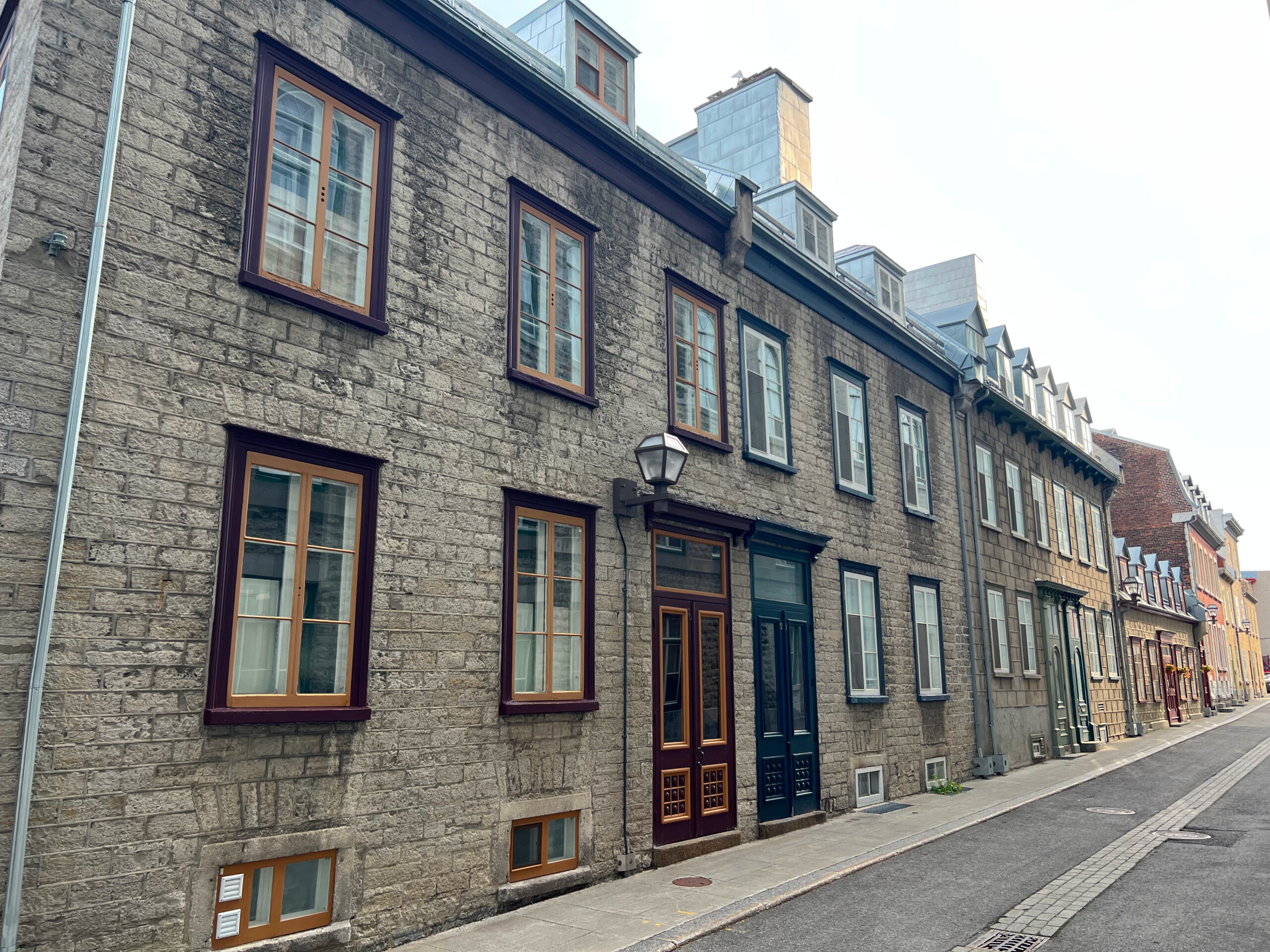
Quebec City is the whole city. Old Quebec is the historic district inside it. Visitors sometimes use the names interchangeably because many famous landmarks are concentrated in Old Quebec, but they describe different geographic areas.
Quebec City: the full municipality
Quebec City includes Old Quebec and many other neighbourhoods and boroughs. Areas such as Saint-Roch, Saint-Jean-Baptiste, Montcalm, Limoilou, Sainte-Foy and Beauport are all part of the wider city, even though their architecture and daily rhythm may feel very different from the historic centre.
When a hotel, restaurant or attraction says it is “in Quebec City,” that does not necessarily mean it is within walking distance of the Château Frontenac.
Old Quebec: the historic core
Old Quebec—Vieux-Québec in French—is the area most visitors picture first. It contains the fortified Upper Town and the older streets of Lower Town. The Historic District of Old Québec is recognized by UNESCO for its exceptional colonial and fortified urban landscape.
Upper Town
Upper Town, or Haute-Ville, sits on the promontory above the river. Major reference points include the Château Frontenac, Dufferin Terrace, the fortifications, the Citadelle area and streets around Place d’Armes.
Lower Town
Lower Town, or Basse-Ville, lies closer to the St. Lawrence River. Place Royale and rue du Petit-Champlain are among its best-known areas. Stairs, sloped streets and the funicular connect it with Upper Town.
How the distinction affects trip planning
- Accommodation: staying in Old Quebec maximizes historic atmosphere and access to landmark sights, but other neighbourhoods may offer quieter streets or a more local feel.
- Walking: Old Quebec is compact, though the grade between Upper and Lower Town matters for mobility.
- Food and nightlife: some of the city’s most interesting everyday dining and nightlife sit outside the walls.
- Transportation: check the actual address rather than assuming every Quebec City listing is in the old town.
Old Quebec is not exactly the same as “inside the walls”
The walls are the clearest visual boundary, but visitor geography is a little messier. Upper Town inside the fortifications is only part of the historic district. Lower Town includes Place Royale and Petit-Champlain below the cliff, and the Old Port stretches toward the river and marina. These areas are commonly grouped into an Old Quebec itinerary even when a route crosses a gate or leaves the most obvious walled streets.
That is why hotel descriptions such as “near Old Quebec,” “Old Port” and “within the walls” should not be treated as synonyms. Check the street address and walking route, especially if stairs or steep grades affect you.
How to recognize the address you are booking
- Inside the walls: best for immediate access to Upper Town landmarks and evening atmosphere.
- Lower Town or Old Port: convenient for Place Royale, Petit-Champlain and waterfront walks, but reaching Upper Town involves a climb or the funicular.
- Saint-Jean-Baptiste: just outside the walls, with everyday shops and a short walk to the historic centre.
- Saint-Roch: below the hill, with restaurants, bars and a more contemporary urban feel.
- Montcalm: west of the core, useful for the Plains of Abraham and Musée national des beaux-arts du Québec.
- Sainte-Foy: part of Quebec City but farther from Old Quebec; it can suit airport, university or suburban business needs better than a sightseeing-first trip.
The official destination organization’s neighbourhood guide is a useful companion when comparing these areas.
A one-day geography that makes sense
Begin in Upper Town around Place d’Armes and Dufferin Terrace, walk a section of the fortifications, then descend to Petit-Champlain and Place Royale. Continue toward the Old Port if time and energy allow. This route shows the main layers of Old Quebec without implying that you have seen the whole city.
With another day, add one neighbourhood outside the historic district. Saint-Jean-Baptiste is the easiest extension on foot; Saint-Roch and Limoilou reveal a different rhythm and a broader range of everyday businesses.
Simple answer
Think of Old Quebec as one historic district within the larger Quebec City. A first visit should include it, but the municipality extends well beyond the walls, cliff and postcard streets.
If you are deciding whether to make the trip, read our honest guide to whether Quebec City is worth visiting.
Discover more from Quebec City 101
Subscribe to get the latest posts sent to your email.