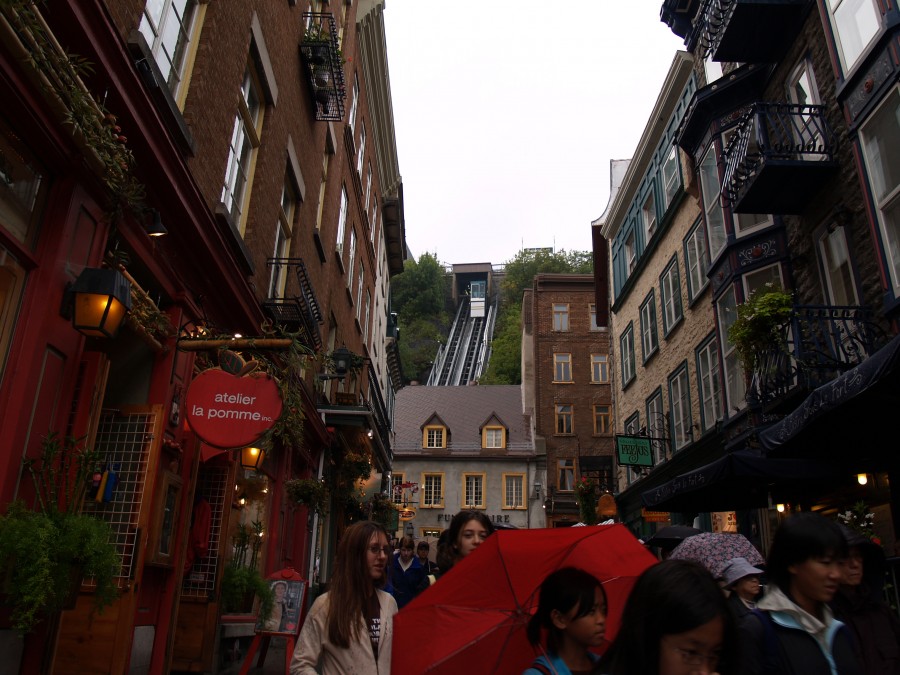
For a first Quebec City trip, I would resist the urge to build a 17-stop checklist.
The city rewards walking, stopping and changing plans when you find something interesting.
These are the things I would actually use to structure a first visit.
1. Walk Old Quebec
Start in Upper Town near Château Frontenac and Dufferin Terrace.
Then walk down toward Place Royale and Petit-Champlain.
This gives you architecture, river views, elevation and the historic street pattern in one route.
2. Take the Québec–Lévis ferry
The ferry gives you the skyline view that is difficult to understand from inside the city.
You do not need a complicated Lévis itinerary. Ride across, spend some time looking back and return.
3. Visit Montmorency Falls
Montmorency Falls is close enough that I consider it one of the easiest nature additions to a first trip.
Use the bridge, viewpoints, cable car or stairs depending on the group.
4. Choose one major museum
The Musée de la civilisation is the easiest broad recommendation.
MNBAQ is stronger if art is the priority.
Do not visit three museums simply because rain is in the forecast. Pick the one that fits your interests.
5. Walk the Plains of Abraham
The park gives you open space and military history without requiring a formal attraction at every turn.
Pair it with the Plains of Abraham Museum if you want more historical context.
6. Leave the walls once
Visit Saint-Roch, Saint-Jean-Baptiste, Montcalm or Limoilou.
You only need one neighborhood to understand that Quebec City is more than Old Quebec.
7. Eat something distinctly Quebec
Poutine is obvious, but do not stop there.
Try Quebec cheese, maple products, regional seafood, tourtière or contemporary Quebec cooking.
Food is one of the easiest ways to get beyond architecture.
8. Visit the Grand Marché
The market gives you a practical way to see regional products and compare producers.
It is especially useful if you want edible gifts instead of generic souvenirs.
9. Add Île d’Orléans or Wendake
Île d’Orléans is the better fit for farms, food and scenery.
Wendake gives you Huron-Wendat history and living culture.
Choose one based on interest rather than trying to squeeze both into a half-day.
10. Let the season change the trip
Summer means festivals and terraces.
Fall means colour.
Winter means Carnival, snow and different walking conditions.
Spring means fewer crowds and more unpredictable weather.
Do not use the same itinerary in February and July.
How many days do you need?
Two days covers the historic core and one major add-on.
Three or four days gives you neighborhoods, a museum and a regional trip without rushing.
Do you need a car?
Not for the historic core.
A car becomes useful for Île d’Orléans, regional nature and some outer attractions.
A realistic two-day first visit
On day one, walk Upper Town and Lower Town without trying to attach a ticketed attraction to every hour. Start near Dufferin Terrace, descend toward Petit-Champlain and Place Royale, then use the ferry for the skyline near the end of the day.
On day two, choose one museum in the morning and one major outdoor addition. Montmorency Falls is the easiest regional choice; the Plains of Abraham and a neighborhood walk work when you want to stay closer to the centre.
What to add with three or four days
A third day creates room for Wendake, Île d’Orléans or a more ambitious nature trip. A fourth lets you slow down, visit a second museum or explore another neighborhood without sacrificing the historic core. This is when the city starts feeling like a place rather than a checklist.
What needs advance booking?
Reserve a special dinner, popular guided tour, spa treatment or limited seasonal event when it matters to you. Basic walking routes, parks and ferry views need less structure. For current attractions and seasonal planning, check Destination Québec cité’s official visitor site and then confirm details with the attraction itself.
Plan around elevation and mobility
Old Quebec is compact but not flat. Cobblestones, steep streets, stairs, snow and ice can turn a short map distance into a real physical task. The funicular can reduce the climb between Upper and Lower Town, and taxis or transit can protect energy for the parts of the day that matter most.
Before booking, check the accessible entrance for historic sites and museums. An attraction may be accessible even when the most scenic route to it is not.
How to keep the trip affordable
Use free experiences—the fortifications, Dufferin Terrace, neighborhood walks, public markets and river viewpoints—as the structure. Pay for the museum, tour or excursion that adds the most value to your interests. A ferry ride can deliver a memorable skyline without the cost of a formal cruise.
Stay somewhere that reduces repeated taxi trips. A cheaper room far from the places you want to walk can lose its savings in time and transportation.
Weather backup plan
Choose one indoor option before the day begins. The Quebec City museum guide compares the strongest choices. Light rain may improve a quiet neighborhood walk; dangerous cold, heavy snow or poor air quality calls for a genuine change of plan.
Leave at least one open block in the schedule. It gives you room for a delayed meal, changing weather or an unexpected street, shop or view that deserves more time.
My take
On a first visit, I would build the trip around Old Quebec, the river and one experience outside downtown.
Then leave room for the city to interrupt your plan.
That is usually where the better travel moments happen.
Discover more from Quebec City 101
Subscribe to get the latest posts sent to your email.