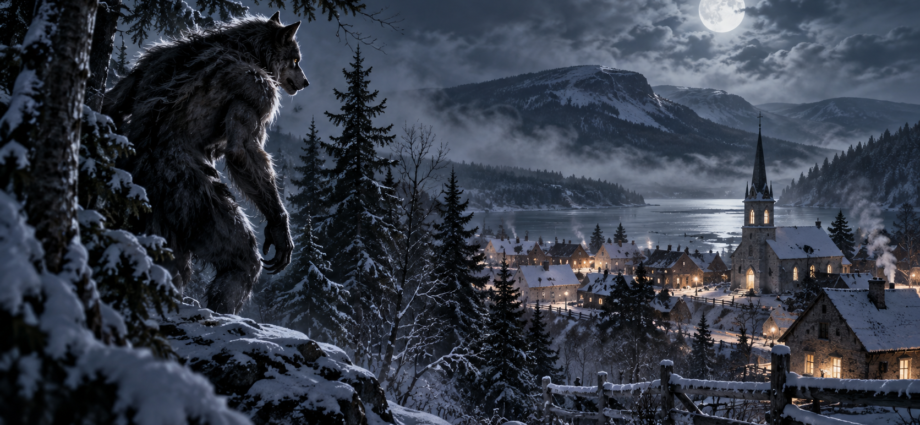
French Canada did not need Hollywood to discover werewolves. Long before movie studios added full moons, silver bullets and expensive special effects, Quebec storytellers already had the loup-garou.
The creature was not always the standardized half-man, half-wolf familiar today. Depending on the storyteller, a cursed person might appear as a wolf, dog, pig, calf or another animal. Folklore was flexible. Nobody issued an official monster style guide.
What was a loup-garou?
In French-Canadian tradition, the loup-garou was usually a person transformed through a curse, moral failure or violation of religious obligations. Stories often connected the transformation with avoiding confession or failing to observe expected Catholic practices for a long period.
The exact rules varied. Some versions involved a curse lasting a set number of years. In others, the victim had to be wounded so that blood was drawn before the human form could return. Retellings changed from parish to parish and family to family.
Why were the stories so religious?
Catholicism once shaped much of Quebec’s public and private life. A frightening tale about someone becoming a monster after rejecting religious duties made a very efficient warning.
It also gave adults a memorable way to enforce ordinary rules: attend church, respect community expectations and do not wander around alone at night. “Come home before dark” has more force when the alternative is being chased through the woods by your cursed neighbour.
Were the stories meant to be believed?
Folklore does not divide neatly into fact or entertainment. Some listeners may have believed these stories literally. Others enjoyed them as cautionary tales, ghost stories or an explanation for something frightening and poorly understood.
Oral storytelling also rewards a good performance. A tale becomes more specific, more local and usually more gruesome as it is repeated. The barn acquires a name. The mysterious animal becomes enormous. Somebody’s distant cousin suddenly witnessed everything.
Was the Quebec loup-garou always a wolf?
No. That is one of the more interesting differences between folk tradition and modern pop culture. The French name literally points toward a werewolf, but Canadian versions could describe other animal forms. The important element was often the cursed human beneath the animal appearance.
How could the curse be broken?
One common theme required drawing the creature’s blood. Some versions added a condition that the rescuer could not reveal the person’s identity or tell the story for a number of years. Break that promise and the curse—or at least the trouble—could return.
There was no single canonical rulebook. Anyone insisting that every French-Canadian loup-garou followed exactly the same transformation schedule has made folklore tidier than folklore has ever been.
Are there documented Quebec City werewolf attacks?
No credible historical record establishes a recurring werewolf attacking Quebec City. Earlier sensational retellings sometimes presented invented sightings as history. The actual tradition is interesting enough without manufacturing a body count.
How to read old versions of the story
Folklore is not a police report. Details move between families, parishes and printed retellings, so two contradictory versions can both belong to the tradition. Treat exact dates, named victims and dramatic “true sighting” claims with caution unless a historical source supports them. The variation is part of the evidence that these stories were told, adapted and used—not proof that one official version existed.
Why the legend still matters
The loup-garou survives because it carries several pieces of Quebec history at once: French roots, Catholic influence, rural isolation, oral storytelling and the universal pleasure of scaring people who should probably have gone home an hour earlier.
For another case where documented history grew into something much stranger, read the story of La Corriveau, one of Quebec’s most enduring legends.
Discover more from Quebec City 101
Subscribe to get the latest posts sent to your email.