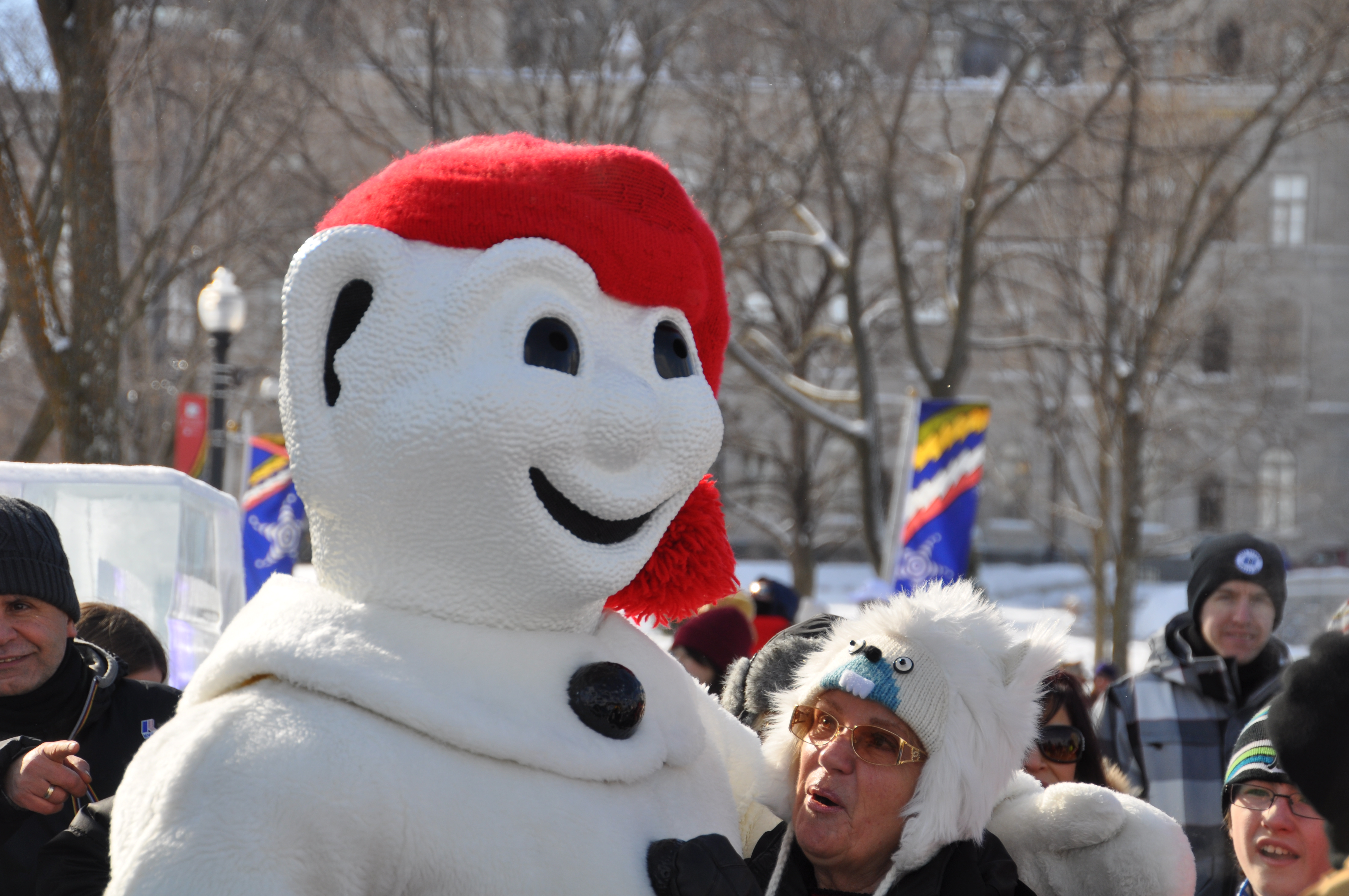
Bonhomme Carnaval is easy to recognize: a smiling white snowman wearing a red toque and a colourful ceinture fléchée, or arrow sash. Those two accessories turn a simple snow figure into the official ambassador of Quebec City’s Winter Carnival.
The red toque
Bonhomme’s knitted red cap has a white pompom. It adds a strong block of colour against his white body and ties his appearance to practical winter clothing. “Toque” is the common Canadian word for a knitted winter hat.
The ceinture fléchée
The woven sash around Bonhomme’s waist is his most culturally distinctive accessory. Arrow sashes are associated with French-Canadian winter dress and the fur-trade era. Their history reflects craft traditions and exchanges that developed in northeastern North America; it is more complex than assigning the sash to one community alone.
On Bonhomme, the bright sash defines his waist and connects the modern festival mascot with a recognizable element of Quebec heritage.
His snow-white body and black buttons
Bonhomme is not a person in ordinary winter clothing: he is a snowman character. His rounded white form, black buttons and broad smile keep the design readable and friendly in photographs, parades and large outdoor events.
Does the costume change?
The core look stays consistent because it functions as Bonhomme’s identity. Event-specific presentation and accessories may vary, but the red toque, arrow sash and white snowman form are the essential elements.
What Bonhomme does not wear
Bonhomme’s basic design does not include a winter coat, trousers or boots. His body is the snow suit: the rounded white sections and black buttons establish that he is a snowman rather than a human character dressed for cold weather. The small number of accessories makes the silhouette recognizable at a distance.
That simplicity is also practical for a mascot. The red hat and multicoloured sash remain readable in snow, at night and in crowded event photographs. Extra garments would weaken the visual identity that the Carnival repeats from year to year.
Is the sash a costume souvenir?
The sash is not merely a decorative belt invented for the mascot. A ceinture fléchée is made through a finger-woven technique that creates arrow-like and other geometric patterns. Historic sashes served practical and symbolic roles, and modern artisans continue the craft. Bonhomme’s version uses bold colours to make that heritage element immediately visible.
Visitors will see sash-inspired patterns on Carnival clothing and souvenirs, but quality and construction vary. A printed pattern is not the same object as a handwoven sash. If the craft itself interests you, look for information about the maker and technique rather than relying on appearance alone.
The Carnival effigy is a different object
Bonhomme is also represented on the small Carnival effigy worn by participants during the event. The effigy changes by edition and serves as an event symbol or access token for specified activities. It should not be confused with the full mascot costume or with the arrow sash. Check the current Carnival rules because access arrangements and included activities can change.
How to recognize the official look
- a bright red knitted toque with a white pompom;
- a multicoloured arrow sash tied at the waist;
- a rounded white snowman body with black buttons; and
- a friendly face designed to remain consistent across official appearances.
Who is Bonhomme?
Bonhomme is the public face of the Carnaval de Québec, a major winter festival held in Quebec City. He appears at official activities and is associated with the Ice Palace, parades and the Carnival effigy.
For current dates and programming, use the official Carnaval de Québec website. For more seasonal context, see our Quebec Winter Carnival guide and our guide to deciding when Quebec City is worth visiting.
Discover more from Quebec City 101
Subscribe to get the latest posts sent to your email.