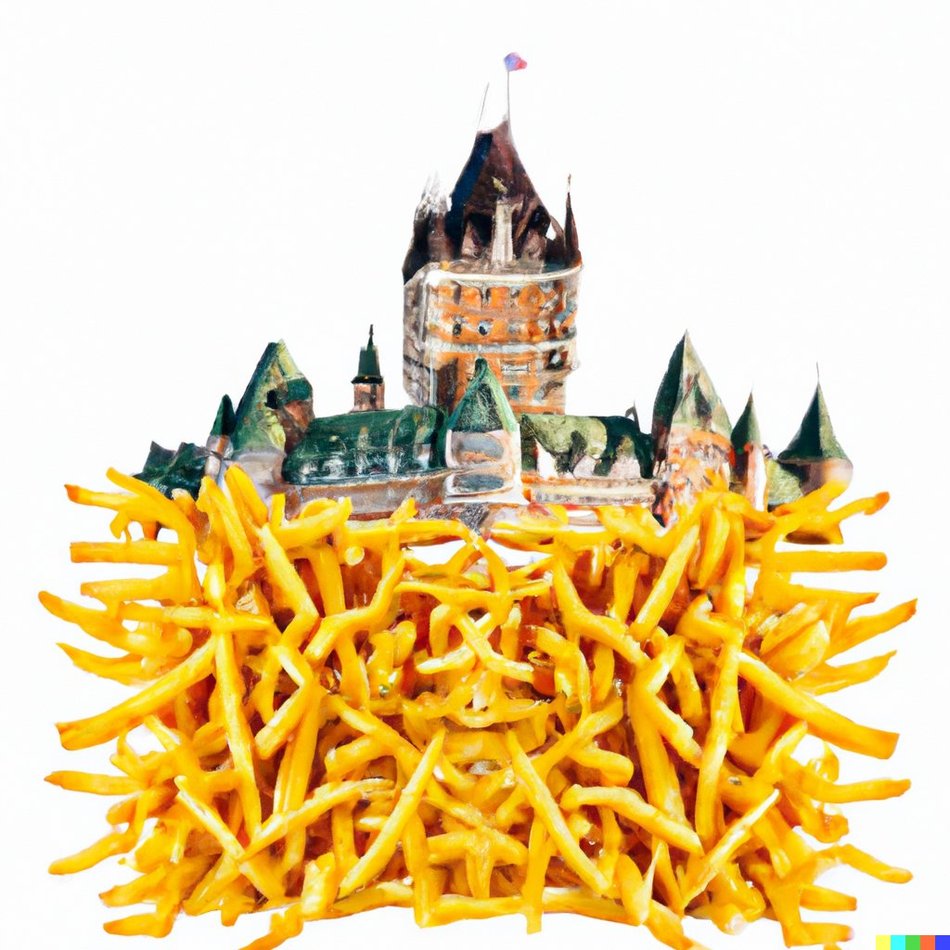
Where did poutine come from? Quebec gave the world the dish and then neglected to save a clean receipt showing exactly who invented it, which feels appropriate for food that may have begun when somebody asked for cheese curds in a bag of fries.
The broad history is clear: poutine emerged in rural Quebec during the late 1950s. The exact restaurant, inventor and moment remain disputed.
The Warwick version
One of the best-known stories begins at Le Lutin qui rit in Warwick in 1957. A customer reportedly asked owner Fernand Lachance to add fresh cheese curds to an order of fries.
Lachance is said to have responded with a phrase meaning, roughly, “That will make a mess.” The fries and curds were initially served without gravy, which was added later to keep the mixture warm and complete the dish people now recognize as poutine.
It is a great origin story: spontaneous, practical and slightly dismissive of the food’s future importance.
The Drummondville claim
Le Roy Jucep in Drummondville credits restaurant owner Jean-Paul Roy with serving the combination of fries, cheese curds and gravy. That three-part structure matters because fries and curds alone are not the complete modern dish.
Drummondville has promoted its claim strongly and describes Roy as the inventor of poutine. Warwick supporters, naturally, remain unconvinced.
Why did poutine appear in Centre-du-Québec?
The region had local dairy production and ready access to fresh cheddar cheese curds. Curds were an everyday regional food before tourists started photographing them.
That availability explains more than any carefully planned culinary breakthrough. Restaurants already sold fries. Customers already ate fresh curds. Gravy was familiar. Putting them together did not require a laboratory, only the willingness to serve a meal that looked like a mess.
Where did the word poutine come from?
The name has competing explanations too. It has been connected with older words for a mixture or mess, and the Warwick story links it to Lachance’s supposed reaction. None of the neat explanations has ended the debate.
Food history becomes especially unreliable once a dish succeeds. Memories improve, marketing departments get involved and everybody discovers that a relative invented it first.
So who really invented poutine?
The honest answer is that we cannot award the title with certainty. Warwick has a strong claim to the fries-and-curds beginning. Drummondville has a strong claim involving the finished combination with gravy. Other regional stories also form part of poutine’s development.
It is reasonable to describe poutine as a Centre-du-Québec creation that developed through more than one restaurant and became recognizable during the late 1950s and early 1960s.
Tourisme Montréal summarizes the Warwick story as beginning with fries and cheese curds in 1957, while Drummondville’s Le Roy Jucep emphasizes Jean-Paul Roy’s role in serving the now-familiar combination with gravy. Le Roy Jucep’s own history also documents its later public claim to the title of poutine inventor. Those sources help explain the dispute, but neither turns a regional food legend into a courtroom verdict.
What makes a traditional poutine?
The formula is simple:
- French fries sturdy enough to hold gravy
- Fresh cheddar cheese curds
- Hot brown gravy
The simplicity is deceptive. Cold curds, weak fries or gravy that tastes like salted wallpaper paste can ruin the entire thing.
Our Quebec City poutine guide explains how to order it, what fresh curds should be like and which variations still make sense.
Warwick and Drummondville can continue arguing about ownership. Everyone else can focus on the more urgent issue: eating poutine before the fries surrender completely.
For more on the competing accounts, see Tourisme Montréal’s poutine history and Le Roy Jucep’s own historical account.
The origin debate matters less on the plate than the curds; our guide explains the best cheese for poutine.
Discover more from Quebec City 101
Subscribe to get the latest posts sent to your email.