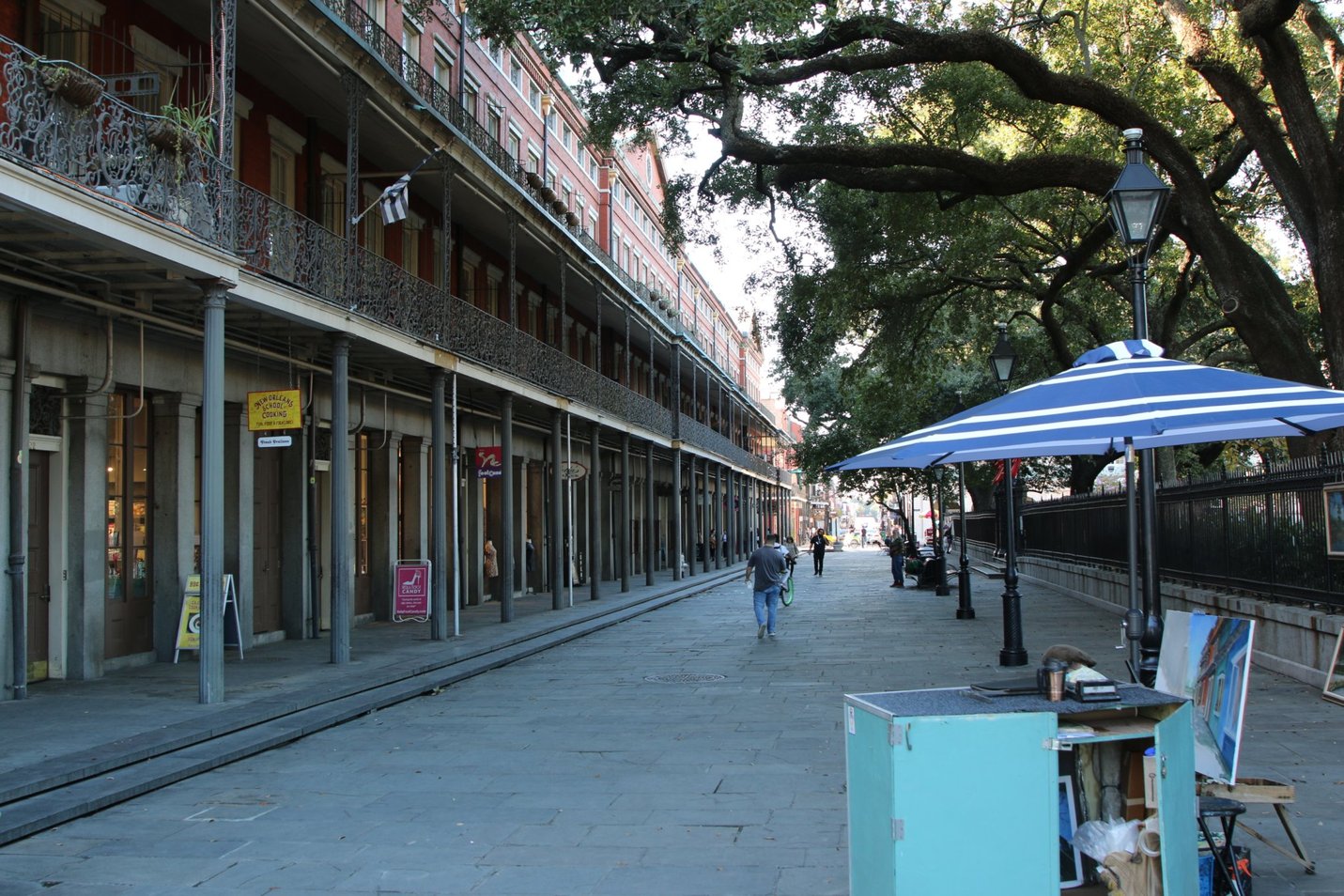
Quebec City and New Orleans get compared because both have French colonial roots, strong regional food, historic streets and river settings.
The comparison works up to a point.
Then climate, architecture, language, music and culture take the two cities in completely different directions.
Both have French roots
French colonial history influenced place names, religion, law, food and identity in both regions.
That shared origin is real, but it did not produce two versions of the same city.
Old Quebec versus the French Quarter. Both historic districts reward walking.
Old Quebec has stone buildings, steep elevation changes, surviving fortifications and a much more visibly military layout.
The French Quarter has Creole architecture, iron balconies, courtyards and a flatter street pattern.
The river matters in both cities. Quebec City developed around the St. Lawrence.
New Orleans developed around the Mississippi.
In both places, the river explains trade, settlement and strategic importance.
Climate could not be more different
Quebec City has serious winter.
New Orleans has subtropical heat and humidity.
If weather shapes your travel happiness, this difference matters more than the fact that both cities once spoke French.
Food culture. Both cities have regional cuisines strong enough to become part of their tourism identity.
Quebec gives you poutine, tourtière, maple, cheese and contemporary Québécois cooking.
New Orleans gives you Creole and Cajun traditions, gumbo, po’boys, red beans, seafood and much more.
Neither should be reduced to three famous dishes.
Festival identity
Mardi Gras and Quebec Winter Carnival are both major events that temporarily transform their cities.
They are also completely different traditions.
One is tied to Carnival before Lent and a massive parade culture. The other embraces deep winter through snow, ice, Bonhomme and outdoor celebration.
Music. New Orleans has one of the most important music traditions in North America, especially around jazz and brass-band culture.
Quebec City has strong festivals and live music, but music is not embedded in the city’s global identity in the same way.
Language. Quebec City is predominantly French-speaking today.
New Orleans is overwhelmingly English-speaking, though French and Creole histories remain important to the region’s identity.
Nightlife
New Orleans is the obvious choice if late-night street energy and music are central to your trip.
Quebec City has nightlife but generally feels calmer and more compact.
UNESCO status. Old Quebec is a UNESCO World Heritage Site.
The French Quarter is historically important but is not a UNESCO World Heritage Site.
That correction matters because travel comparisons often repeat the claim inaccurately.
Which should you visit?
Choose Quebec City for fortified history, French-language immersion, winter atmosphere and easy access to waterfalls and countryside.
Choose New Orleans for live music, Creole and Cajun food traditions, subtropical weather and a much stronger late-night culture.
How the historic districts feel on foot. Old Quebec’s Upper Town and Lower Town are linked by steep streets, staircases and the funicular. The French Quarter is flatter, with a denser mix of restaurants, bars, residences and visitor traffic. In Quebec City, the preserved walls and views from Cap Diamant keep reminding you of military geography. In New Orleans, balconies, courtyards and the Mississippi riverfront create a different sense of enclosure and movement.
Trip cost and timing. Neither city has one universal high season. Quebec City prices can rise around summer festivals, fall weekends and Winter Carnival. New Orleans demand can surge around Mardi Gras, Jazz Fest, conventions and major sporting events. Compare the dates you actually want instead of assuming one destination is always cheaper.
For Quebec City, our season-by-season guide explains how weather and events change the trip. For heritage context, compare the UNESCO listing for Old Québec with the City of New Orleans’ Vieux Carré Commission, which protects the French Quarter locally.
My take
If you love one city, that does not mean the other will feel familiar.
The fun of the comparison is seeing how two places with French colonial roots evolved into completely different urban cultures.
Discover more from Quebec City 101
Subscribe to get the latest posts sent to your email.