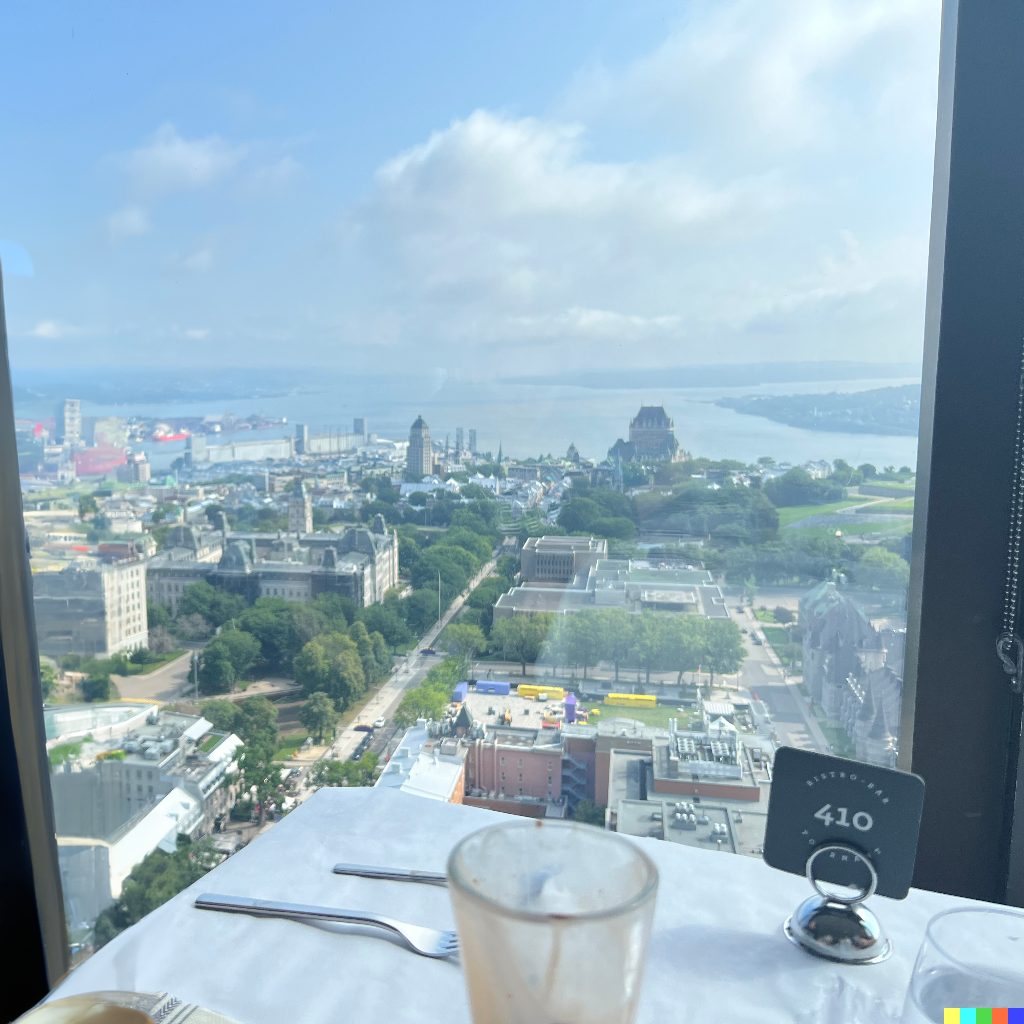
You do not need a long list of gimmicky photo stops to come home with strong Quebec City images. The best locations combine recognizable architecture, elevation, river views and changing light.
1. Dufferin Terrace and Château Frontenac
Start with the city’s classic composition: Château Frontenac, the terrace and the St. Lawrence River. Early morning gives you cleaner views and fewer people.
2. The Québec–Lévis ferry
The ferry gives you one of the easiest wide skyline views of Old Quebec and Château Frontenac. The return approach toward Quebec City is especially useful for photos. See our Québec–Lévis ferry guide.
3. Petit-Champlain
Narrow streets, stone facades, signs and seasonal decorations make Petit-Champlain one of the most consistently photogenic parts of the city. Look beyond the main shopping street for quieter angles.
4. Place Royale
Place Royale works well for architecture and street scenes, especially when soft morning or evening light reaches the facades.
5. Breakneck Stairs
The Escalier Casse-Cou gives you layered views of Lower Town. Be considerate of foot traffic and do not block the stairs for a photo.
6. Parliament Building and Fontaine de Tourny
The National Assembly and the Fontaine de Tourny create a formal architectural setting just outside the walls of Old Quebec.
7. Montmorency Falls
For a landscape image rather than a city scene, Montmorency Falls offers multiple viewpoints and looks very different by season.
8. Promenade Samuel-De Champlain
The riverfront promenade gives you open water, contemporary landscaping and long sight lines. It is especially useful around sunrise and sunset.
9. Old Quebec streets and gates
Saint-Jean Gate, Saint-Louis Gate and the surrounding streets work well when you want the fortified-city character rather than one specific landmark.
10. Jacques-Cartier National Park
If you can leave the city, the Jacques-Cartier valley is a completely different photographic subject: mountains, river and forest, with particularly strong fall color.
Plan by light, not by list order
Dufferin Terrace, the ferry and the riverfront are strongest when the sky has colour and the city lights begin to balance with it. Petit-Champlain and Place Royale are easier to photograph early, before delivery traffic and tour groups fill the narrow space. Midday can work for architectural detail even when it is harsh for wide scenes.
Clouds are not a failed photography day. Soft overcast light reduces contrast on stone facades, while rain creates reflections. In winter, protect batteries from cold and watch for condensation when moving a camera between outdoor air and a warm interior.
Build an efficient photo route
Start in Upper Town for Dufferin Terrace and the gates, descend to Petit-Champlain and Place Royale, then reach the ferry terminal for a skyline crossing. That grouping avoids repeated climbs. Parliament and the Fontaine de Tourny can be added before or after the walls.
Montmorency Falls and Jacques-Cartier National Park are separate outings, not quick additions to an Old Quebec walk. Promenade Samuel-De Champlain also deserves its own transport plan because the best section may not align with a first-time walking route.
Composition ideas at the major stops
- Dufferin Terrace: use the boardwalk lines to lead toward Château Frontenac, or turn toward the river for a less familiar frame.
- Ferry: leave room around the skyline and try both directions; the light can favour Lévis on one crossing and Quebec City on the return.
- Petit-Champlain: include people for scale instead of waiting indefinitely for a completely empty street.
- Place Royale: photograph facade details and doorways as well as the full square.
- Breakneck Stairs: frame from a landing and keep the walking path clear.
- Montmorency Falls: use several viewpoints rather than assuming the footbridge produces the best photograph.
Photography etiquette
Old Quebec is a neighbourhood and working district, not a set. Do not block doorways, stairs or traffic for a portrait. Ask before making a recognizable person the subject of an image, and follow posted restrictions inside attractions, churches and businesses.
Drones require a separate legal and site-access check. Do not launch simply because a viewpoint is open to pedestrians.
Camera and phone strategy
A wide lens helps in narrow streets, but moderate focal lengths often produce cleaner architecture with less distortion. Phone users should tap to protect bright highlights around the sky and snow. Wipe the lens frequently; pocket lint and mist ruin more travel photos than the camera model does.
A practical two-day photo plan
On day one, begin at Dufferin Terrace shortly after sunrise, work downhill through the Breakneck Stairs, Petit-Champlain and Place Royale, and finish with a round-trip ferry crossing near sunset. Check the official Québec–Lévis ferry schedule before committing to the timing. On day two, choose one larger landscape outing: Montmorency Falls for a compact half-day or Jacques-Cartier National Park when you have a car and more time.
Check conditions before you set out
Weather can change quickly along the St. Lawrence, and winter surfaces may be icy. Keep equipment light enough to carry on steep streets, pack a cloth for spray or snow, and confirm opening hours and access restrictions directly with each site. The official Destination Québec cité website is a useful starting point for current visitor information. If you post locations publicly, avoid identifying private homes or sharing a stranger’s face without permission.
Save time for one repeat visit
Quebec City rewards repeat walks. Weather and light can transform the same scene within an hour, so revisit a favourite viewpoint rather than trying to collect every location in one day. For broader geography, use our Quebec City versus Old Quebec guide.
Discover more from Quebec City 101
Subscribe to get the latest posts sent to your email.