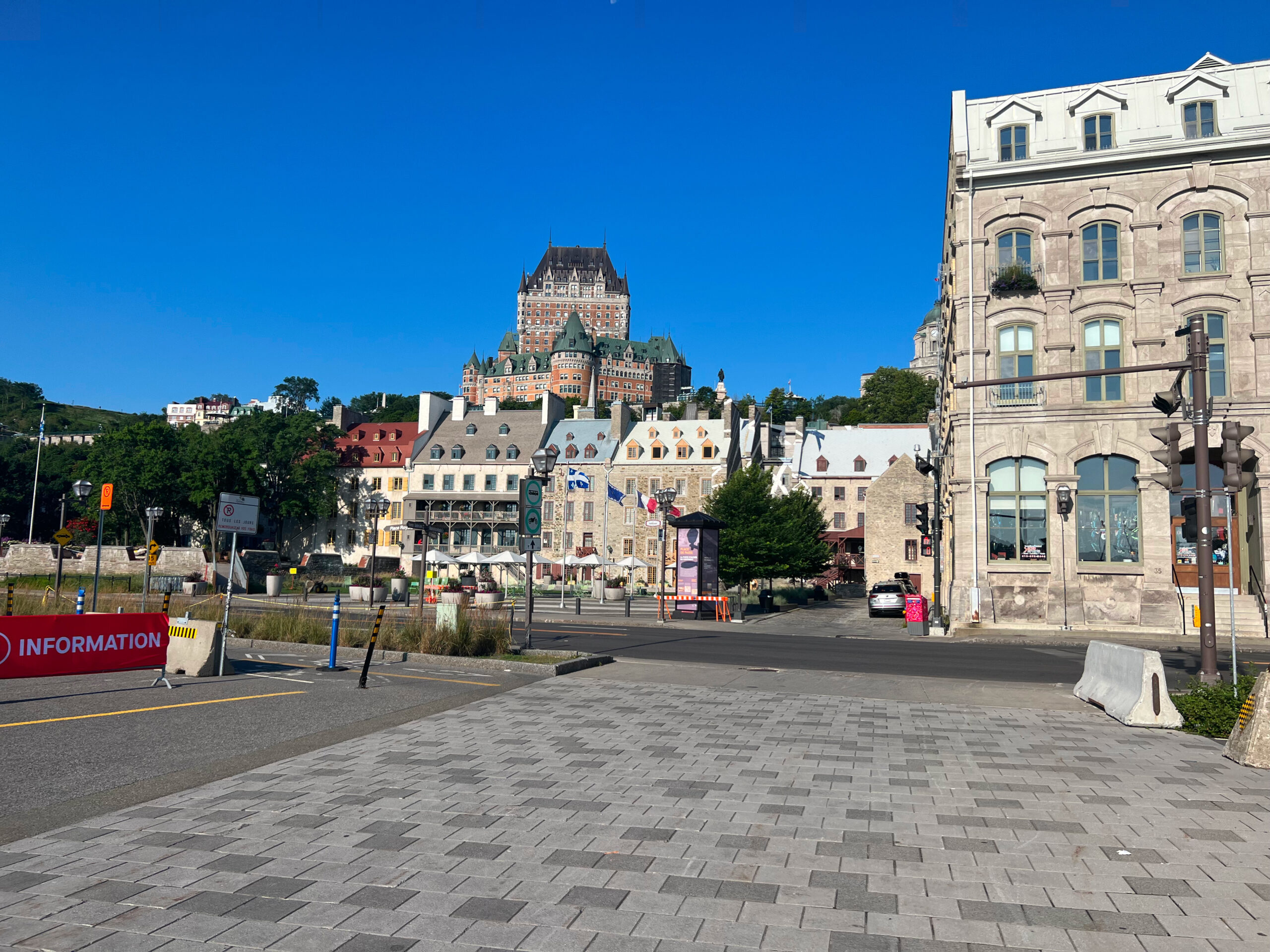
Quebec City’s Old Port is easy to misunderstand because visitors often blend it together with Place Royale and Petit-Champlain. They are close enough to walk between, but the Old Port has its own personality: waterfront, maritime history, museums, cruise traffic and wider open spaces than the tight streets most people picture when they think of Old Quebec.
If you have already spent a day inside the walls, the Old Port is one of the easiest ways to make the city feel different without actually leaving downtown.
Start at the St. Lawrence River
The St. Lawrence is the reason this district exists. Walk toward the waterfront before doing anything else.
You will see pleasure boats around Bassin Louise, commercial port activity farther out and, during cruise season, large ships arriving surprisingly close to the historic district.
The river view is not background scenery here. It is the organizing feature.
The Musée de la civilisation is the major indoor attraction in the area and one of Quebec City’s strongest museums overall.
If the weather is bad, it can anchor half a day. If the weather is beautiful, I would still consider it rather than treating museums only as rain insurance.
Naval history and the museum’s current status
The Musée naval de Québec is a specialized museum focused on Canada’s Naval Reserve and the naval history of the St. Lawrence.
As of September 2026, the museum’s official site says it is closed until June 2027 while its permanent exhibition is being renewed. If you are planning a future visit, check the current opening status before building your day around it.
When a large cruise ship is in port, the district can become noticeably busier.
That is not necessarily bad. There is more energy, businesses are busy and the waterfront feels active. But if you want quiet streets and clean photos, check the official Port of Québec cruise schedule and go early on a non-peak morning.
The Old Port Market is no longer here
This is one of those details that keeps old guidebooks alive long after the information is wrong.
The former Old Port Market no longer operates in its old waterfront location. Quebec City’s main public market is now the Grand Marché de Québec at ExpoCité near the Videotron Centre. The market’s current site lists it as open year-round, seven days a week.
If someone tells you to “go to the Old Port Market,” make sure they are not working from a ten-year-old article.
I would start along the waterfront, move toward the Musée de la civilisation, then continue into Place Royale and Petit-Champlain.
From there, take the stairs or funicular back toward Upper Town.
That gives you river, museum, historic square, narrow streets and elevation change in one compact route.
How much time do you need?
Without a museum, two to three hours is enough for a relaxed walk and some stops.
Add a museum and lunch, and you have an easy half-day.
The district is not huge, but it rewards slowing down. There is no prize for completing every waterfront block.
Morning is calmer and better if you want less pedestrian traffic.
Evening can be excellent for river light and illuminated historic buildings. The Old Port also feels less “tour group” and more like part of the actual city once the daytime rush fades.
Walking, hills and accessibility
The waterfront itself is relatively easy, but the connection back to Upper Town is the issue.
Cobblestones, hills and stairs matter, especially for anyone with mobility limitations. The funicular can save a steep climb, so do not wait until everyone is exhausted to remember it exists.
If you are already staying in central Quebec City, I would walk or use transit rather than moving a car for this district.
During major events and cruise periods, parking can become more annoying than useful.
Why the Old Port feels different from Old Quebec
Old Quebec can sometimes feel almost too perfectly preserved. The Old Port breaks that up.
You still have history, but you also see boats, port infrastructure, modern museums and a working river.
That mixture makes the area feel less like a historic set and more like a city that has kept changing around the same waterway for centuries.
Discover more from Quebec City 101
Subscribe to get the latest posts sent to your email.