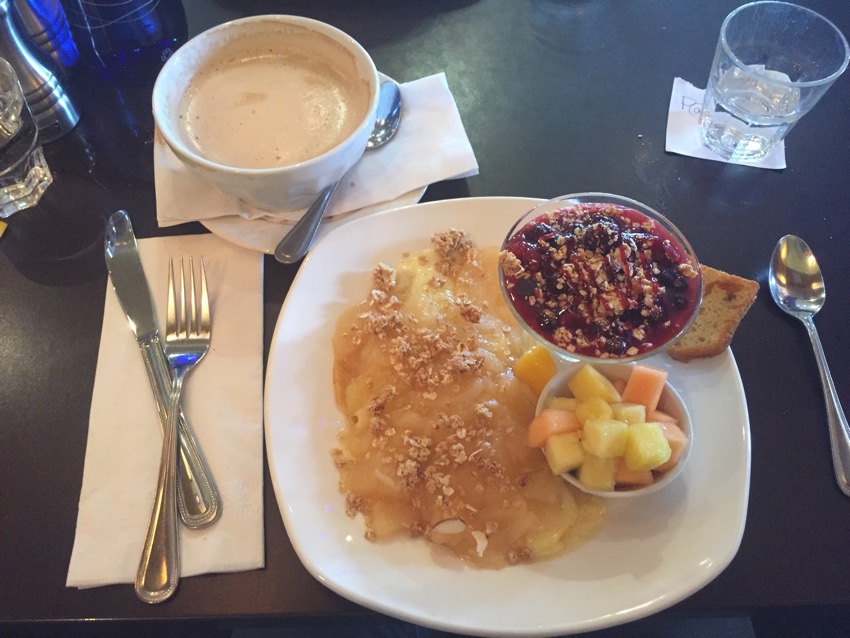
Quebec City is one of those places where food photography gets easier because the surroundings are already doing half the work for you.
You have old stone walls, small dining rooms, market stalls, bakery windows, natural light and food with strong visual texture. The challenge is not finding something to photograph. It is taking memorable photos without turning every meal into a production.
1. Photograph a bakery window before you go inside
Croissants, breads and pastries look great through glass because the window creates layers: food in the foreground, reflections of the street and the interior behind them. Watch for glare. Move a step to either side instead of planning to fight the reflection later.
Take a wide establishing frame first, then move closer for a pastry or handwritten sign. The pair tells a better story than ten nearly identical close-ups.
2. Shoot poutine immediately
Poutine does not wait for photographers. The fries soften, the curds warm and the gravy settles fast. Take the photo when it lands, then eat it.
A close three-quarter angle usually works better than trying to include the entire table. Keep one recognizable element—the fork, serving dish or edge of the table—so the food still has scale.
3. Photograph cheese labels
A cheese board looks good, but six months later you may have no idea what you ate. Make one clean photograph of the board and another of the labels or menu. The second image is not glamorous; it is useful when you build an album, caption a post or look for the cheese again.
4. Look for maple details instead of clichés
You do not need another generic bottle of syrup. Look for maple candy, a plated maple dessert, a sugar-shack-style preparation or syrup being poured where the texture is visible. A detail that shows how an ingredient is used says more than a souvenir display.
5. Use markets for context
At a market, the best image is often not one perfect apple. Include hands, signs, baskets and the vendor setup so the photograph says something about where you were. The official Destination Québec cité regional explorer is useful for finding food stops and neighbourhoods before you set out.
Always ask before making one person the obvious subject. If the stall is crowded, step aside after taking a frame instead of blocking customers while you review it.
6. Use window light in restaurants
Natural side light gives food depth. Overhead light tends to flatten everything, and phone flash usually makes a beautiful plate look harsh. If you have a window, use it. Turn the plate slightly so light falls across the food rather than directly behind it.
On a phone, tap the brightest important part of the dish and lower the exposure a little if highlights are disappearing. Recovering a slightly dark shadow is easier than recreating a white plate that has lost all detail.
7. Photograph the drink in the room
Beer, cider and cocktails are more interesting when the frame includes a little of the bar or dining room. A glass against a blank wall can be anywhere. A glass with Quebec City stonework, a terrace or a recognizable interior gives it context.
Check the background before shooting. Moving a menu or water glass a few centimetres often improves the picture more than changing a camera setting.
8. Ice cream and chocolate move fast
A stop such as Chocolats Favoris is photogenic because of the thick chocolate shell and contrasting colours. Take the photo quickly. Melted chocolate running over your hand is less charming than it sounds.
Choose the background before the order arrives. Then you only need to raise the cone, make two or three frames and start eating.
9. Photograph the room, not other diners
Quebec City has memorable dining rooms, especially in historic buildings. Capture arches, stone, windows, bar details and tables without making strangers the main subject of your vacation album.
Aim toward architectural details, wait for a quieter moment, or ask staff whether photography is welcome. People have a reasonable expectation that dinner is not a photo shoot.
10. End with one wide table shot
Ten close-ups of individual plates do not tell the full story. Take one wider image showing the table, drinks, plates and a little of the room. That image often becomes the frame that actually brings the meal back later.
Do it before the table becomes cluttered with receipts and empty glasses. If you are dining with others, ask once rather than repeatedly delaying the meal.
A simple five-frame sequence
When you want a complete story without photographing all evening, use five frames: the exterior, the room, one hero dish, one detail and the table. That gives you a sense of arrival, place, food and company while keeping the camera session short.
For a market or bakery, substitute a street scene, the stall, a wide display, a label and the item you chose. A repeatable sequence also stops you from making 40 versions of the same plate.
Phone settings matter less than light
You do not need a professional camera. Clean the phone lens, tap to expose for the food and avoid over-brightening. Use portrait mode carefully because it can blur forks, glassware and the edge of a plate in strange ways.
Keep the phone level when photographing a dining room, and use the grid to keep walls vertical. For an overhead table photo, hold the camera parallel to the tabletop so round plates stay round.
Do not annoy the restaurant
This is the most important tip. Turn off the flash, silence camera sounds where your device allows it, keep the session short and do not stand on a chair. Ask before photographing staff or entering a work area.
Good food photography should not make everyone else regret sitting near you. The meal comes first; a useful photo can usually be made in seconds.
Tell a Quebec City story
The strongest travel food photos show more than the dish. A poutine beside a snowy window, a pastry in Saint-Jean-Baptiste, a cider on Île d’Orléans or a restaurant table against old stone gives the food a location.
If you are choosing where to eat, start with our Quebec City restaurant guide. Decide which one or two moments matter, then take fewer photos and better ones.
Discover more from Quebec City 101
Subscribe to get the latest posts sent to your email.