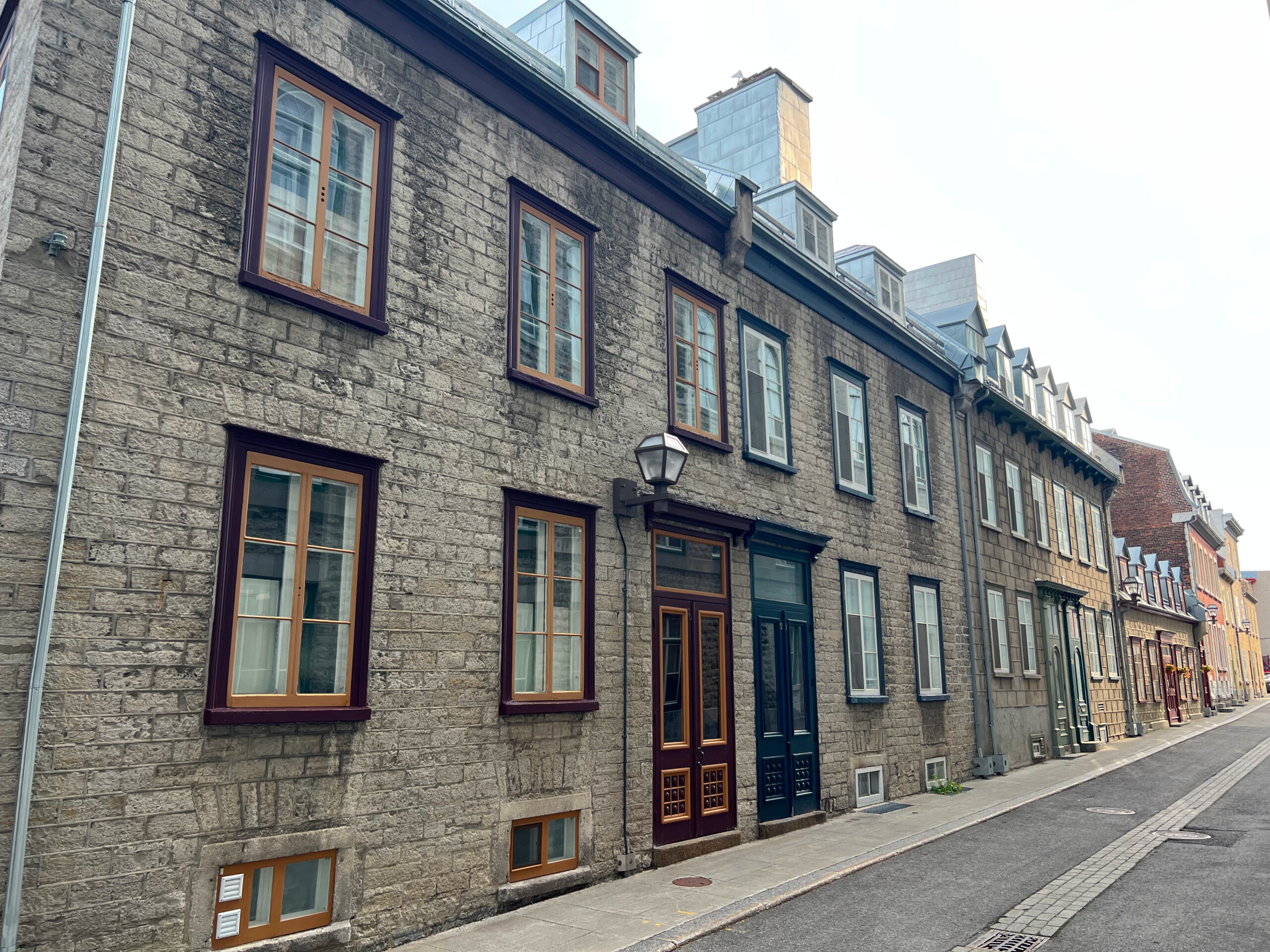
Quebec City neighborhood safety is better understood street by street than with one giant safe-or-dangerous label. For the broader visitor question, start with our Is Quebec City Safe? guide; this page focuses specifically on Old Quebec, Saint-Roch and the neighborhood-level context visitors and movers usually want.
I would look at the exact street, time of day and type of concern rather than judge an entire district by a reputation.
What is the crime rate in Quebec City?
If you are searching for the crime rate in Quebec City, Statistics Canada’s 2025 police-reported data puts the Québec census metropolitan area’s Crime Severity Index at 55.0, compared with 75.0 for Canada overall. The police-reported crime rate was 3,493 incidents per 100,000 people in the Québec CMA, compared with 5,585 nationally.
Those figures are useful context, not a personal safety guarantee. The Crime Severity Index combines the volume and seriousness of police-reported crime across a large metropolitan area. It does not tell you what will happen on one block, at one hour, or to one traveler. It also should not be used to stigmatize a neighborhood where social problems may be more visible.
Old Quebec and the main visitor areas
Old Quebec, Petit-Champlain, Dufferin Terrace and the major tourism corridors are heavily walked and generally comfortable for visitors. Crowds, restaurants, hotels and attractions keep a lot of pedestrian activity in the area, especially during the main travel seasons.
That does not make tourist areas crime-free. Keep bags secure, avoid leaving valuables visible in a parked car and pay attention in dense crowds. During festivals or major events, the practical concern is often ordinary opportunity theft rather than some uniquely Quebec City problem.
How to think about Saint-Roch
Saint-Roch is one of the neighborhoods visitors ask about most because it combines restaurants, nightlife, offices, transit, public services and more visible homelessness than Old Quebec. That can make the area feel rougher to some visitors even when they are not personally threatened.
Visible poverty, addiction or social disorder is not the same thing as evidence that every person nearby is dangerous. You can stay aware of your surroundings without treating vulnerable people as a threat. If a particular block or situation makes you uncomfortable, cross the street, change your route or use a taxi or rideshare rather than turning that discomfort into a claim about the whole neighborhood.
Nighttime changes how a neighborhood feels
A street you barely notice at 2 p.m. can feel completely different at 1 a.m. If you are choosing a hotel or apartment, look at the exact route you would use after dinner or nightlife. Lighting, pedestrian activity, hills, transit and the distance from your destination can matter as much as a broad neighborhood label.
Grande Allée, Saint-Roch and other nightlife areas can be busy late. Use the same judgment you would in another city: stay aware, watch drinks, keep your phone charged and use legitimate transportation if a late-night walk no longer feels comfortable.
Cars, luggage and winter hazards
Do not leave luggage, electronics or shopping bags visible in a parked vehicle. Rental cars full of belongings are avoidable targets, and a trunk is a better place for anything you cannot take with you.
For many winter visitors, the most immediate physical risk is not crime at all but ice. Quebec City has steep streets, stairs and historic surfaces. Good footwear, traction and taking your time can matter more to the day than worrying about an internet list of “dangerous neighborhoods.”
Solo travelers and families
Solo travel in Quebec City is common and generally straightforward. Share your plans when appropriate, keep your phone charged, know how you are getting back to your hotel and avoid turning an unfamiliar late-night walk into a test of confidence.
Families should use the same ordinary city habits they use elsewhere: agree on a meeting point in crowded attractions, keep children close near traffic and save the accommodation address on every adult’s phone.
If you are thinking about moving
If you are moving to Quebec City, citywide safety statistics are only one piece of the decision. Visit the exact block during the day and evening. Check lighting, noise, transit, nearby services, winter walking conditions and the route to groceries, school or work.
A neighborhood can have acceptable crime levels and still be wrong for your lifestyle because of noise, distance, hills, traffic or limited late-night transit. That is why a block-level visit is more useful than a simplistic online ranking.
Use current official information
The Service de police de la Ville de Québec (SPVQ) publishes prevention information and local reporting. Statistics Canada provides the broader metropolitan crime indicators used above. Use current official information instead of a years-old article ranking neighborhoods by reputation.
Call 911 for an immediate threat, fire or medical emergency. For a non-urgent concern, use current SPVQ contact information rather than approaching a situation you do not understand. Travelers should keep their accommodation address saved offline so they can give a precise location if needed.
People considering a move can pair this safety context with our practical guide to living in Quebec City and our broader living in Quebec City guide.
My take
I would be comfortable sending most visitors around central Quebec City with normal urban precautions. The 2025 metropolitan data supports the broader picture of a comparatively low-severity crime environment, but I still would not tell anyone that every block feels identical at every hour. Use the data for context and your own eyes for the specific street in front of you.
Discover more from Quebec City 101
Subscribe to get the latest posts sent to your email.