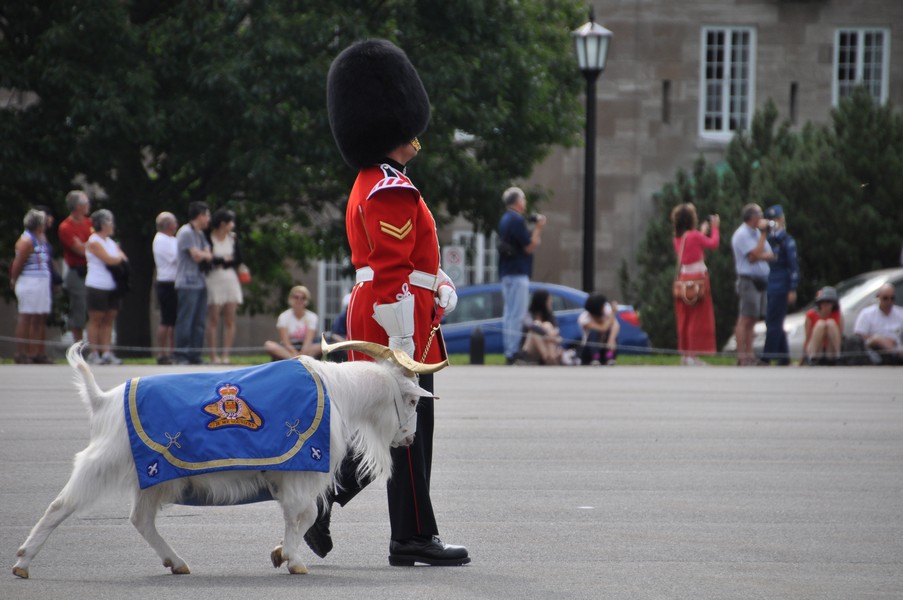
The Citadelle is one of the places people see on a Quebec City map and assume they can just walk into. You cannot. It is an active military installation as well as a historic site, which is exactly what makes the visit more interesting—and a little less flexible than visiting a normal museum.
If military history interests you at all, I would put it on the list. If you have only a few hours in Quebec City and simply want the best views and old streets, you may be happier walking the walls and Dufferin Terrace instead.
What exactly is the Citadelle?
The Citadelle sits on Cap Diamant above the St. Lawrence River. Its star-shaped defensive design forms a major part of Quebec City’s fortifications, and it is home to the Royal 22e Régiment.
That last point matters. This is not a military fort that was abandoned and turned into a museum. It remains in use, so access is controlled.
The standard visit is guided and generally takes about an hour. The experience combines the historic fortifications with the Royal 22e Régiment Museum and outdoor sections of the site.
I would not squeeze the Citadelle into a tiny gap between reservations. Even if the formal tour is about an hour, you need time to arrive, check in and move through a working military property.
The views are part of the reason to go
The location on Cap Diamant gives you a strong sense of why Quebec City mattered militarily. From up here, the relationship among the river, cliffs, Upper Town and defensive walls becomes obvious in a way that is harder to understand from a map.
This is one of those attractions where the geography is as important as the exhibits.
People sometimes lump everything together as “the fort.” They are connected historically, but the visitor experience is different.
The public sections of the Quebec City walls and fortifications can be explored independently. The Citadelle has controlled access and requires a tour. If you do both, the wall walk gives you freedom while the Citadelle gives you context.
Changing of the Guard and ceremonial events
Ceremonial programming has changed over time, so I would not visit based on an old blog post promising a specific Changing of the Guard schedule. Check the Citadelle’s official calendar for the year you are visiting.
That is a general rule in Quebec City: permanent history does not mean permanent programming.
Who will enjoy this most?
I would recommend the Citadelle especially for military-history people, architecture and fortification enthusiasts, older children who can handle a guided tour, and anyone who wants to understand why Quebec City developed where it did.
If your children are very young or your group hates guided experiences, this may not be the highest-value use of your limited time.
A significant portion of the visit can be outdoors. The site is elevated and exposed, so weather feels different here than it does while walking sheltered streets below.
Wear comfortable shoes and bring layers. In winter or shoulder season, assume wind and slippery surfaces are possible.
How I would fit it into a day
The Citadelle works well with the Plains of Abraham, Parliament Hill, the city walls and Dufferin Terrace. You do not need a car to connect those areas if you are comfortable walking.
Book or verify your tour time first, then build the rest of the day around it. The walls and terrace are flexible; the guided military site is not.
For current languages, ticket prices, tour times and ceremonial programming, use the official Citadelle visitor information before you go.
Discover more from Quebec City 101
Subscribe to get the latest posts sent to your email.