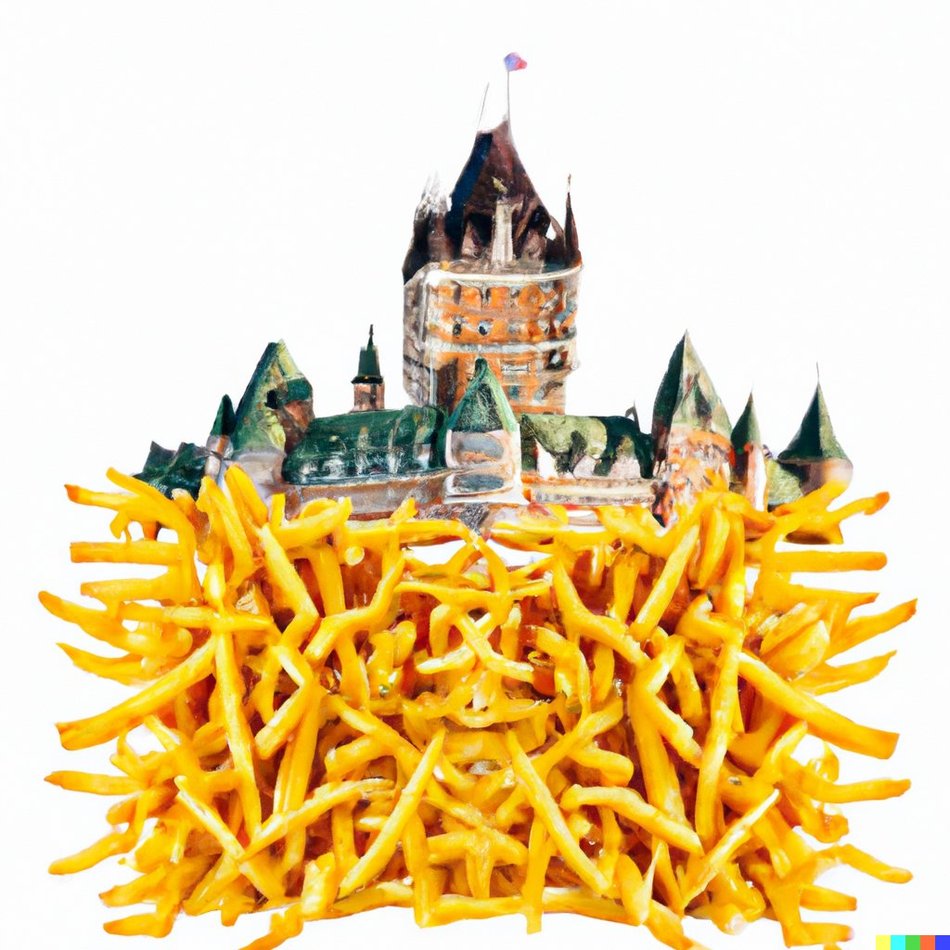
What is poutine? It is the Quebec dish built from three things: hot French fries, fresh cheddar cheese curds and brown gravy. Remove the curds and you have fries with gravy, which may still be good but is not traditional poutine.
The formula sounds simple. That simplicity is exactly why each part matters. There is nowhere for stale curds, weak gravy or limp fries to hide.
What makes a traditional poutine?
The fries need enough structure to survive the sauce. They do not have to stay completely crisp, but very thin fries can collapse as soon as the gravy arrives. A sturdy fry gives you a useful contrast between crisp edges, soft potato and sauce.
Fresh cheddar curds are equally important. They should be mild, springy and distinct rather than melted into one uniform cheese layer. Very fresh curds often squeak against your teeth. Our guide to the best cheese for poutine explains why freshness usually matters more than brand.
The gravy is normally brown, savory and hot enough to warm the curds. Recipes vary. Some restaurants use beef or poultry stock, some make vegetarian versions and others guard proprietary blends. If dietary restrictions matter, ask instead of assuming.
Should the cheese completely melt?
No. The curds should soften when the hot gravy hits them, and the smallest pieces may melt around the edges. You should still be able to see and bite into separate curds. That springy texture is one of the main differences between poutine and ordinary cheese fries.
Shredded mozzarella, cheese sauce or sliced cheese can produce an enjoyable plate of loaded fries, but none recreates the same texture. Outside Quebec, where same-day curds can be difficult to find, a substitution may be practical. It is better to describe it honestly than pretend every combination of potatoes, cheese and sauce is identical.
Where did poutine come from?
Poutine emerged in rural Quebec in the late 1950s. Several communities and restaurants around Centre-du-Québec make competing origin claims, especially in and around Warwick and Drummondville. There is no single uncontested inventor, and the origin of the word itself is also debated.
That uncertainty is part of the history. Neat stories are often repeated as settled fact, but poutine appears to have developed through several closely related ideas: adding curds to fries, serving them together in a bag, and then covering the combination with sauce.
The dish is now associated with Canada internationally, but its origin is specifically Quebec. Calling it Canadian is not wrong; stopping there misses the place and food culture that created it.
What does poutine taste like?
A classic poutine is salty, savory and rich. The pleasure comes from contrast: crisp and soft potato, warm gravy, cool or room-temperature curds, and the slight resistance of the cheese. It is comfort food, not a delicate tasting menu.
Eat it promptly. Poutine has a short peak after assembly because the fries continue absorbing gravy. A closed takeout box also traps steam, so the texture changes quickly. If you are comparing restaurants, eating on-site gives the kitchen its fairest chance.
Popular variations
Quebec restaurants top poutine with smoked meat, pulled pork, chicken, sausage, mushrooms, vegetables and specialty gravies. Some versions become a full meal. Vegan and vegetarian poutines are also increasingly common, but confirm both the gravy and cheese substitute if those details matter to you.
For a first order, the classic version is the best baseline. Once you know the balance of fries, curds and gravy, the variations make more sense.
How to order poutine in Quebec City
Sizes can be deceptive because the dish is dense. A small may be enough beside another meal, while a large can be substantial on its own. Ask whether toppings replace or supplement the classic ingredients, and check allergen information directly with the restaurant.
My preference is straightforward: fresh curds, hot fries, gravy with enough body to coat without drowning everything, and no long wait before eating. Our main Quebec City poutine guide covers where the dish fits into a visit and the different styles you will encounter.
Discover more from Quebec City 101
Subscribe to get the latest posts sent to your email.