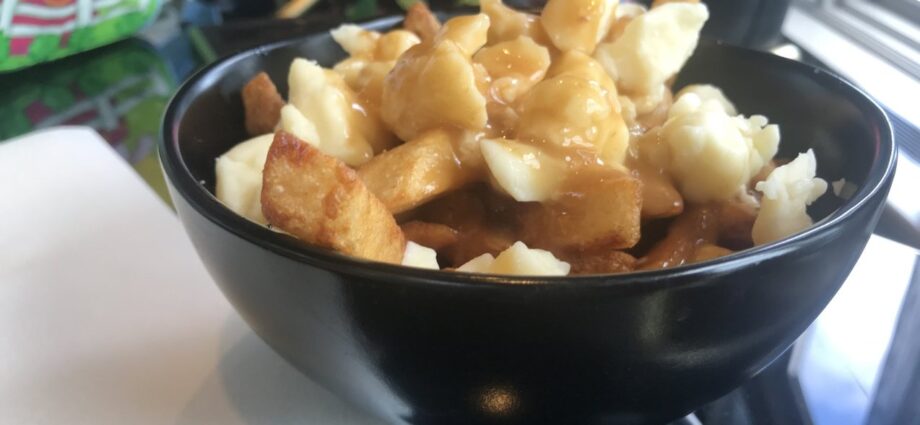
Best cheese for poutine? Fresh cheddar cheese curds—not shredded mozzarella, cheese slices or cheese sauce. Those substitutes can taste good, but they create a different dish and texture.
What matters most is not a famous label. It is freshness, spring and the way the curds respond when hot gravy reaches them.
Why fresh cheddar curds work
Fresh curds have a resilient, slightly rubbery texture. The hot gravy warms and softens them without instantly turning the cheese into one melted layer. You get recognizable pieces of cheese among the fries rather than a blanket across the top.
Very fresh curds can squeak against your teeth. The sound comes from the interaction between the curd’s protein structure and your teeth. Quebecers often use that squeak as a quick freshness signal, although it is not the only measure of quality.
The flavour is usually mild and milky. A strongly aged cheddar may have more intensity, but it does not reproduce the soft, springy quality that defines the classic dish.
How fresh should poutine curds be?
As fresh as practical. Curds gradually lose moisture and their characteristic squeak, and refrigeration changes their texture. Quebec’s local cheese culture makes same-day or very recent curds easier to find than in many other places.
Fresh curds may sometimes be displayed unrefrigerated for a limited period under local handling rules. That does not mean cheese can sit warm indefinitely. Follow the producer’s storage directions and local food-safety guidance, especially once a package has been opened.
If you are buying curds for homemade poutine, check the production or packaging date, keep them as directed, and use them promptly. A fresh local curd will often outperform a better-known brand that spent days in transit.
Should the curds melt?
They should soften, and some edges may melt slightly. A classic poutine should still contain distinct pieces when it reaches the table. If the cheese disappears into strings or a continuous layer, you lose one of the dish’s defining textures.
Temperature balance matters. The fries and gravy need to be hot, but prolonged heating can turn the curds into something closer to ordinary melted cheese. Assemble the dish just before serving and eat it promptly.
What can you use when curds are unavailable?
Mozzarella is the most common substitute because it is mild and melts easily, but it becomes stretchier and more uniform than curds. Small pieces of mild cheddar may hold their shape better, although aged cheddar brings a sharper flavour. Neither is a perfect replacement.
Cutting cheese into chunks does not turn it into curds. Cheese curds are a distinct stage of cheesemaking, formed before the cheese is pressed into a wheel or block. You can make curds at home if you are comfortable making fresh cheese, but buying good curds is easier for most people.
If substitutions are necessary, aim for a mild cheese that softens without vanishing completely. Serve it as your version of poutine rather than claiming the texture is identical.
How much cheese should you add?
There is no single official ratio, but every serving should deliver curds throughout the dish, not just three decorative pieces on top. Layering some curds among the fries helps distribute them while the gravy warms the entire plate.
Avoid burying everything under so much cheese that the fries and gravy become supporting characters. Poutine works because the three core components remain recognizable.
Freshness matters more than branding
People enjoy ranking cheese brands, yet poutine is a poor place to chase prestige at the expense of freshness. Look for curds that are mild, springy and recently made. Then pair them with fries strong enough to hold sauce and gravy you genuinely like.
For the larger story, see our guide to where poutine came from and our explanation of what makes a classic poutine.
Discover more from Quebec City 101
Subscribe to get the latest posts sent to your email.