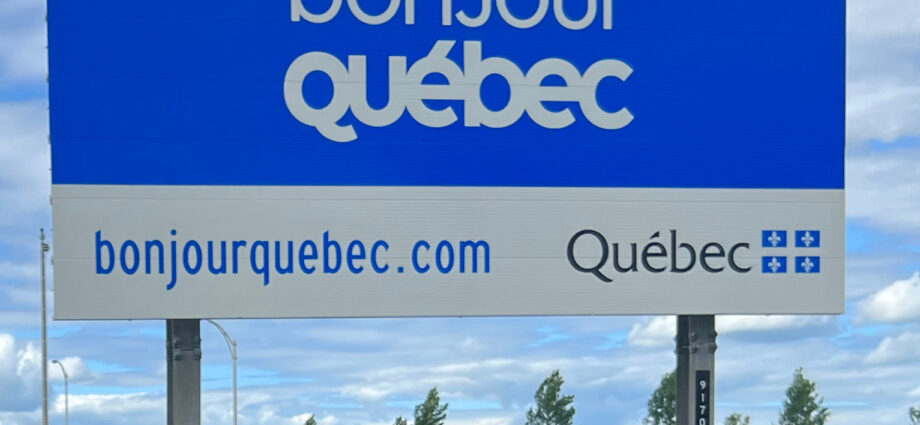
Quebec is a province in eastern Canada. Quebec City is its capital, while Montreal is its largest city. That sounds simple, but “Quebec” can mean the province or, in casual conversation, Quebec City, which is why map searches and travel plans sometimes get confusing.
The province is enormous: the Government of Quebec describes a territory of about 1.7 million square kilometres with more than 12,000 kilometres of boundaries. Most residents, however, live much farther south, especially along the St. Lawrence River corridor.
Quebec the province versus Quebec City
Quebec is one of Canada’s 10 provinces. Quebec City is a municipality inside that province and serves as the provincial capital. Montreal is also in Quebec, but it is a different city roughly 250 kilometres southwest of Quebec City by road.
In French, the distinction is often clearer in context: le Québec usually means the province, while Québec can mean the city. If you are booking a hotel, rental car or train, confirm that your destination says Québec City or Québec, QC rather than assuming every result for “Quebec” refers to the capital.
Where Quebec sits in Canada
Quebec occupies a huge section of eastern Canada. Ontario is to the west. New Brunswick and Newfoundland and Labrador are to the east. Along the south, Quebec meets the United States at New York, Vermont, New Hampshire and Maine.
The province also reaches far north. The Government of Quebec notes that northern Quebec accounts for most of the province’s geographic area, and more than 20 northern communities are accessible only by air or sea. That is an important reality check for visitors: the province is not one compact road-trip destination.
For official geographic context, see the Government of Quebec overview and its territorial information.
Why the St. Lawrence River matters
The St. Lawrence is the easiest way to understand where most visitors will spend their time. Quebec’s populated areas are heavily concentrated along the river, which links Montreal, Trois-Rivières, Quebec City and communities farther east toward the Gulf of St. Lawrence.
Quebec City sits where the river narrows. That strategic position shaped the city’s history and explains why the old fortified city rises above the river. Montreal is farther southwest on an island in the St. Lawrence system.
Montreal and Quebec City are not interchangeable
Montreal is Quebec’s largest city and its biggest metropolitan area. Quebec City is smaller and is the seat of the provincial government. They feel different as destinations, too: Montreal is a larger, denser metropolis, while Quebec City’s historic core is more compact and is especially easy to explore on foot.
If you are choosing between the two, our Quebec City vs. Montreal comparison breaks down the differences for visitors without pretending one city is universally better.
Quebec has 17 administrative regions
The province is divided into 17 administrative regions. Quebec City is in the Capitale-Nationale region, while Montreal forms its own administrative region. Other well-known areas include Charlevoix, the Eastern Townships, the Laurentians, Gaspésie and Nord-du-Québec.
Those regional names matter because a place advertised as being “in Quebec” can be several hours from Quebec City. Always check the actual municipality before building an itinerary around the capital.
Language in Quebec
French is Quebec’s official language and the main public language across most of the province. English is common in parts of Montreal and in much of the tourism industry, but usage varies considerably by region.
Visitors do not need perfect French to travel in Quebec City, but a greeting such as bonjour is useful and appreciated. Road signs, public notices and many local websites will appear first in French.
How far apart are the places on the map?
Montreal and Quebec City are normally around a three-hour drive apart, depending on traffic and weather. Ottawa is west of Montreal. Charlevoix begins east of Quebec City, while destinations in Gaspésie or northern Quebec require much longer travel times.
That scale is easy to underestimate on a map. A province-wide vacation can involve hundreds or even thousands of kilometres. For a first trip centered on the capital, it is usually better to treat Quebec City and nearby day-trip areas as one itinerary rather than trying to cover the whole province.
Planning a first visit to Quebec City
Once you have the geography straight, start with our Quebec City must-sees. Old Quebec, the St. Lawrence waterfront and the central neighborhoods can fit together naturally, while destinations farther from the core are easier with transit, a taxi or a car.
The short version is simple: Quebec is the province, Quebec City is the capital, Montreal is the largest city, and the St. Lawrence River is the geographic spine connecting much of southern Quebec.
Discover more from Quebec City 101
Subscribe to get the latest posts sent to your email.