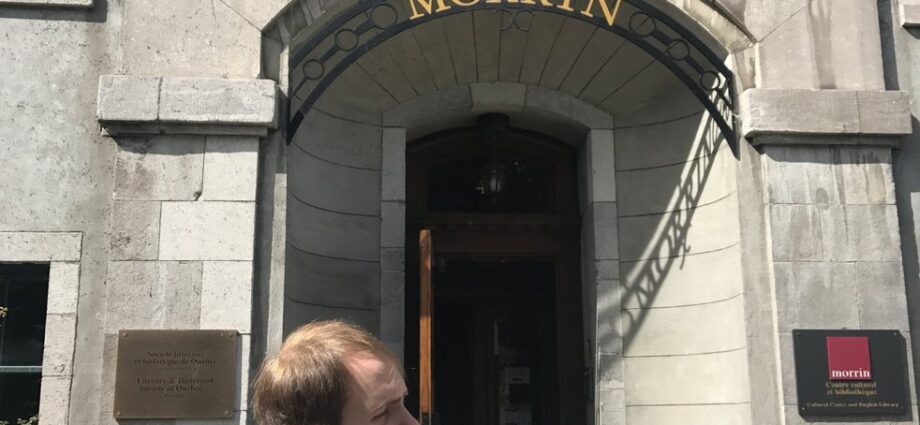
Inspector Gamache is the thoughtful Quebec detective at the center of Louise Penny’s mystery series, with connections to Three Pines, Quebec City and the Morrin Centre.
If you are visiting Quebec City because of the books, the key thing to understand is that Three Pines is fictional—but the Quebec around it is very real.
Who is Armand Gamache?
Gamache is a senior investigator with the Sûreté du Québec, the provincial police service.
He is thoughtful, observant and deliberately different from the hard-boiled detective stereotype.
The series is as interested in relationships, community and moral choices as it is in solving murders.
Canadian author Louise Penny introduced Gamache in Still Life.
The books grew into a long-running series centered on recurring characters and the fictional village of Three Pines.
Is Three Pines real?
No.
There is no official Three Pines village to visit.
Penny has drawn inspiration from Quebec’s Eastern Townships, and fans often travel there looking for landscapes and villages that evoke the books.
A café, church or village may inspire comparisons.
That is different from the fictional place secretly being one real town with the name changed.
Part of the appeal is that Three Pines is assembled from imagination and regional atmosphere.
Bury Your Dead is the book most directly connected with Quebec City.
The Morrin Centre plays an important role, which is why it has become a natural literary stop for fans. It also appears in our guide to Quebec City hidden gems; check the Morrin Centre’s official site for current visitor information.
The Morrin Centre
The building has served multiple roles over its long history, including as a jail and college, and it now houses an English-language cultural centre and library.
That layered history fits Penny’s fiction extremely well.
Start with the Morrin Centre, then walk Old Quebec slowly.
The stone streets, winter atmosphere, churches and historic institutions give you the physical texture that makes the Quebec City portions of the books feel plausible.
Should you visit the Eastern Townships too?
If the imagined village matters more to you than the police-investigation setting, yes.
The Eastern Townships give you small villages and rural landscapes much closer to the emotional world readers associate with Three Pines.
I would read Bury Your Dead before visiting Quebec City if spoilers are not a concern.
Seeing the Morrin Centre after understanding its fictional role adds another layer to the visit.
Reserve a Morrin Centre tour or confirm public opening hours before building the day around the interior. Then give yourself time to walk rather than treating every stop as a checklist. The atmosphere Penny uses—stone buildings, institutional history, snow, language and community—comes from the spaces between landmarks as much as one room.
Books, television and different versions
The screen adaptation Three Pines offers another interpretation of Gamache and the fictional village. It can be enjoyable, but it does not turn one filming location into the official Three Pines. Readers should expect differences in casting, plot and geography between the novels and television.
Still Life introduces the recurring community, while Bury Your Dead is the stronger choice when Quebec City is the main travel connection. Reading in series order gives more character context, but a visitor can begin with the city-linked novel if that is what motivates the trip.
Readers who want the real setting around the fiction should also explore our guide to Old Quebec City.
My take
Gamache tourism works best when you stop looking for one exact fictional village and start looking at the real Quebec places that gave Penny the raw material.
Use the official Louise Penny site for current series information.
Discover more from Quebec City 101
Subscribe to get the latest posts sent to your email.