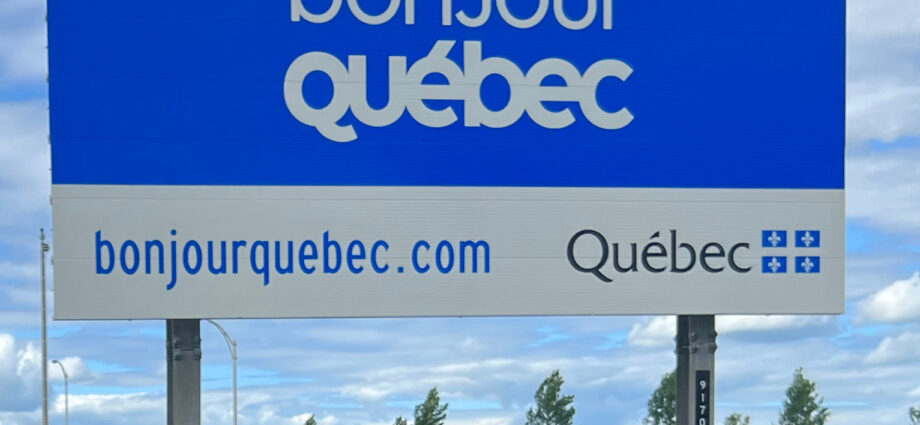
When people outside Quebec hear about Quebec independence, the question often gets simplified into, “Why does Quebec want to separate from Canada?” The first problem is that Quebec is not one person with one opinion. Some Quebecers strongly support sovereignty, some strongly oppose it, and plenty sit somewhere in between.
The issue makes more sense when you stop thinking of it as Quebec simply being angry with Canada. It is tied to language, history, political power, culture, economics and the question of whether Quebec is primarily a province within Canada or a nation that should govern itself as a separate country.
That debate has been going on for generations, and it has already brought Quebec to two referendums on its political future.
Why supporters say Quebec should separate from Canada
Quebec is the only Canadian province with a French-speaking majority. French is not merely something you see on road signs or restaurant menus. It is central to the province’s institutions, culture and political identity.
The modern sovereignty movement grew dramatically during and after the Quiet Revolution of the 1960s. Quebec society was changing quickly. The provincial government expanded its role, the influence of the Catholic Church declined, education and public institutions changed, and a stronger secular Quebec national identity emerged.
For sovereignty supporters, the basic argument is that if Quebec is a nation with its own language, culture and political priorities, it should have the powers of a country rather than sharing major areas of authority with Canada’s federal government.
That can include control over taxation, immigration, international representation, constitutional matters and other responsibilities currently divided between Quebec and Ottawa. The Parti Québécois has historically been the major provincial political party associated with this position.
Language is a major part of the argument, but saying the independence movement is simply about French versus English misses a lot. Questions about Quebec’s constitutional status, control over public policy, economic decisions and national identity are wrapped together.
Supporters also do not all imagine sovereignty in exactly the same way. Over the decades, proposals have ranged from a more independent Quebec maintaining a close economic relationship with Canada to a more conventional model of complete national sovereignty.
Why opponents disagree with Quebec separation
The opposing case is just as important if you are trying to understand Quebec rather than taking a side in the argument.
Federalists argue that Quebec can protect its language and culture while remaining part of Canada. They also point to the economic and practical advantages of the Canadian federation, including a common currency, federal programs, internal trade and shared institutions.
Separation would also create an enormous list of practical questions. What happens to the Canadian dollar? How are federal assets and debts divided? What happens with citizenship, pensions, borders, Indigenous territories, federal employees, international agreements and trade?
Those questions do not automatically make independence impossible, and sovereignty supporters have proposed answers to many of them. They do help explain why the debate is much more complicated than a simple question of cultural pride.
There is also no single Quebec identity. Anglophone Quebecers, Francophones, Indigenous nations, immigrants, people in Montreal, people in Quebec City and people in smaller regions can have very different histories and political priorities. Even within those groups, opinions vary enormously.
Quebec has already voted twice
The independence question is not theoretical. Quebec voters have faced province-wide referendums connected to sovereignty twice.
In 1980, voters rejected the sovereignty-association proposal. According to Élections Québec, the Yes side received 1,485,851 votes and the No side received 2,187,991, with turnout of 85.61%.
The 1995 referendum was a completely different story. It came extraordinarily close. The official result was 50.58% No and 49.42% Yes. Only 54,288 votes separated the two sides, and turnout reached 93.52%.
That result matters when trying to understand modern Quebec politics. Independence was not a fringe idea that briefly appeared and disappeared. In 1995, almost half of the valid ballots cast supported sovereignty.
At the same time, the referendum did not produce independence. Quebec remained in Canada, and there has not been another provincial referendum on sovereignty since 1995.
Why does the issue keep coming back?
Because many of the underlying questions never completely disappeared.
Quebec still has extensive debates over the protection of French, immigration, provincial versus federal authority, secularism, constitutional recognition and Quebec’s identity within Canada. Those debates do not always translate into support for independence, but they keep many of the same political fault lines alive.
The Parti Québécois continues to support Quebec sovereignty. Other provincial parties take different positions on Quebec’s relationship with Canada, ranging from explicit federalism to forms of Quebec nationalism that seek greater provincial autonomy without independence.
In August 2026, Parti Québécois leader Paul St-Pierre Plamondon said his party would not hold an independence referendum while Donald Trump remains president of the United States. That is a good example of how the sovereignty question can be affected by circumstances outside Quebec as well as domestic politics.
So when someone asks, “Why does Quebec want to separate?” the more accurate question is: Why do some Quebecers support independence?
The answer is a mixture of French language protection, Quebec nationalism, historical experience, political autonomy and a belief that Quebec could better control its future as a sovereign country. The counterargument is that Quebec can preserve its distinct identity while retaining the economic, institutional and political advantages of remaining in Canada.
Neither position represents every Quebecer. That disagreement is precisely why the question has survived for so long.
You can see the official referendum totals directly from Élections Québec. For another piece of Canadian historical context, read our explanation of why Canada is not part of the United States.
For broader historical context behind Quebec’s distinct identity, see these Quebec City facts.
Discover more from Quebec City 101
Subscribe to get the latest posts sent to your email.