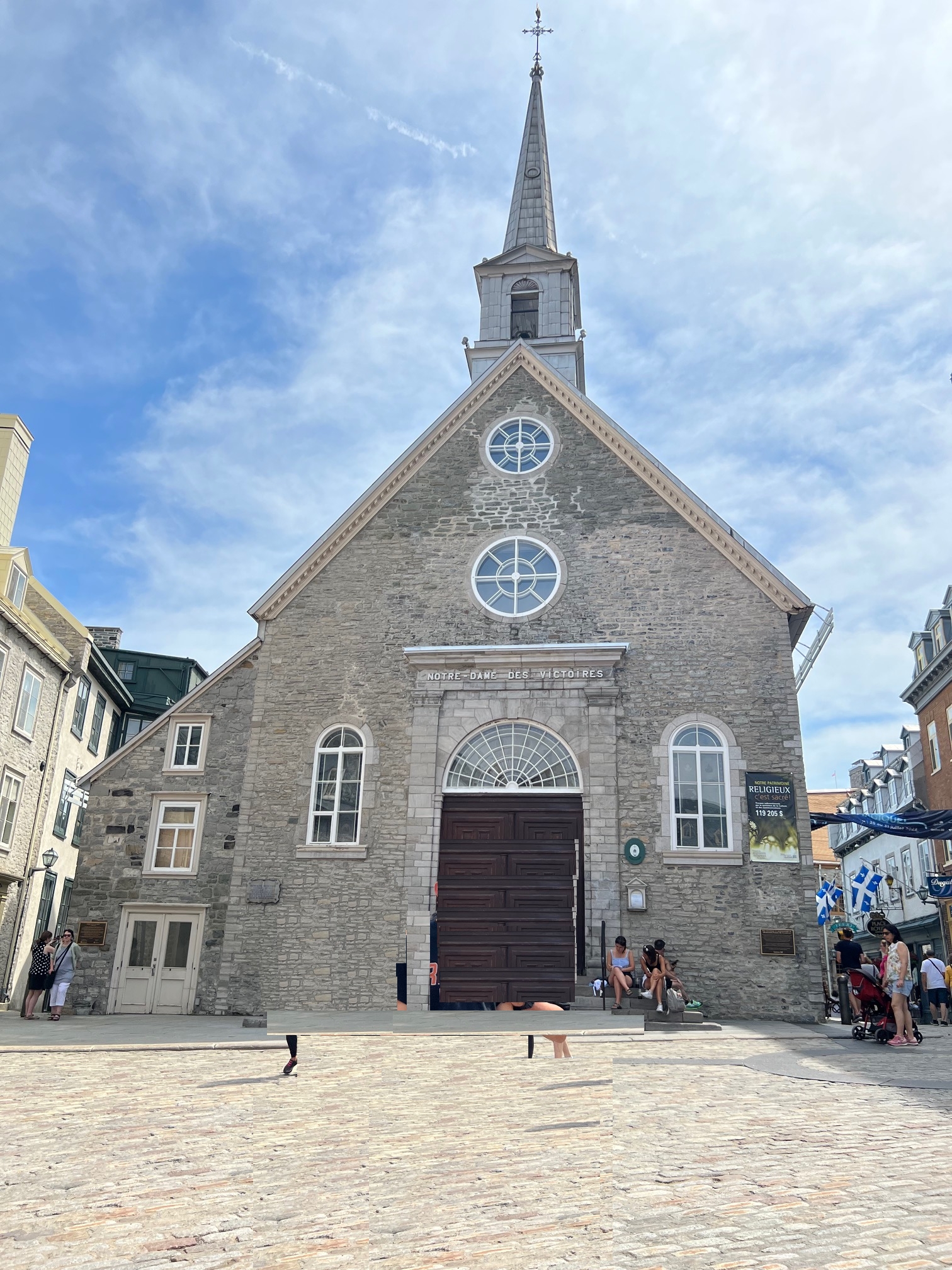
Quebec City facts become more useful when they explain why the city feels different from the rest of Canada. Its French-speaking culture, fortified historic core and position where the St. Lawrence River narrows have shaped more than four centuries of recorded history.
Founding and Indigenous history
- Quebec City was founded on July 3, 1608. Samuel de Champlain established a French trading post and fortified residence near present-day Place Royale. The settlement became the centre of New France and later the capital of the province of Quebec.
- People lived and traded here long before 1608. Jacques Cartier encountered the St. Lawrence Iroquoian village of Stadacona in the 1530s. By Champlain’s arrival, Stadacona was no longer present, while Algonquian peoples continued to use the region. Describing 1608 as the city’s founding should not erase that much older Indigenous history.
- The name reflects the river geography. “Québec” is generally traced to an Algonquin word associated with a narrowing of the river. From high points in Upper Town, it is easy to see why control of this location mattered for transportation, trade and defense.
A UNESCO city with surviving walls
- Old Quebec became a UNESCO World Heritage Site in 1985. UNESCO recognizes the district as an outstanding example of a fortified colonial town and emphasizes its role as the former capital of New France.
- Its historic fortifications are unique north of Mexico. UNESCO describes Quebec as the only North American city to have preserved its ramparts together with the surrounding bastions, gates and defensive works. Visitors can still walk beside the walls and pass through the Saint-Louis and Saint-Jean gates.
- The Citadelle remains an active military installation. The star-shaped fortress is also a national historic site and visitor attraction. Because it remains an active base, public access is controlled rather than the grounds functioning as an unrestricted city park.
Language, war and government
- French is the city’s dominant public language. Quebec City is a major francophone urban centre. English is common in the visitor economy, but learning a few French greetings is useful and respectful. Montreal—not Quebec City—is the province’s largest city.
- The Battle of the Plains of Abraham took place in 1759. British and French forces fought outside the walls in a short battle that became a major turning point in the Seven Years’ War in North America. New France did not formally become British territory until the Treaty of Paris in 1763.
- Quebec City is the provincial capital. The Parliament Building stands just outside the walls near the Fontaine de Tourny. Ottawa is Canada’s federal capital; Montreal is Quebec’s largest city; Quebec City is the seat of the provincial government.
Waterfalls, bridges and landmarks
- Montmorency Falls is 83 metres high. That makes it taller by height than Niagara Falls, although the two waterfalls differ dramatically in width and water volume. Montmorency is just outside the city and can be visited from both lower and upper viewpoints.
- The Quebec Bridge holds a major engineering record. Its 549-metre clear span remains the longest of any cantilever bridge. The structure’s history also includes two catastrophic construction collapses, in 1907 and 1916, which killed dozens of workers.
- Château Frontenac opened in 1893. Canadian Pacific Railway president William Van Horne backed the grand hotel, and architect Bruce Price designed the original wing. Later additions created the skyline visitors recognize today.
One more fact visitors feel immediately
Quebec City experiences four distinct seasons. Summer can be warm and humid, autumn changes the surrounding forests, winter brings sustained snow and cold, and spring thaw can be wet and variable. The best time to visit depends on whether you want festivals, fall color, winter scenery or easier walking weather.
For a closer look at the historic core behind many of these facts, see our Old Quebec guide. For the exact founding story, continue with when Quebec City was founded.
Discover more from Quebec City 101
Subscribe to get the latest posts sent to your email.