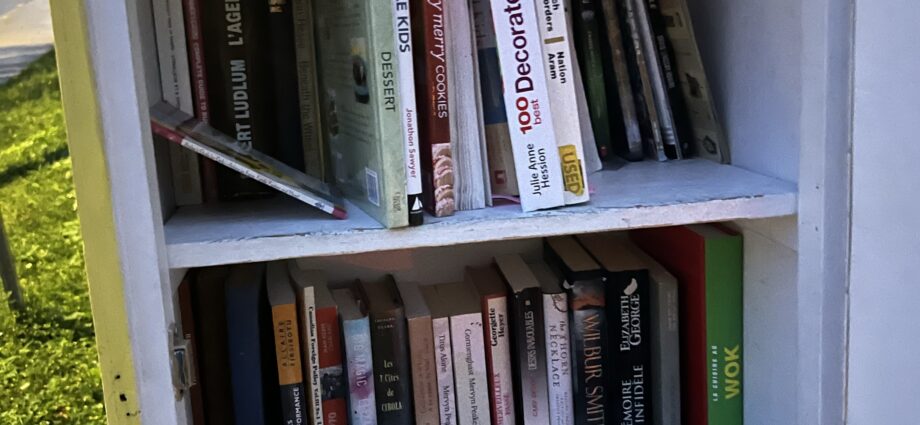
Quebec City’s bibliothèques de rue are small neighbourhood book boxes where people can take a book, leave a book or exchange reading material for free. They turn a fence, front yard or park edge into a tiny shared shelf and are easy to overlook until you know what to look for.
How street libraries work
There is usually no library card, checkout desk or due date. A resident, school or community group maintains the box, and books circulate informally among neighbours and passersby. Take only what you expect to read, and return that book or another one when it is convenient.
The system depends on trust and useful donations. Leave books in clean, readable condition and make sure they fit inside without preventing the door from closing. Water-damaged volumes, outdated manuals, loose magazines and boxes of unwanted material create work for the volunteer who maintains the shelf. If a box is full, find another one rather than piling books on top.
Where to find them and what is inside
Street libraries appear in residential neighbourhoods, parks and other public-facing spaces across Quebec City. Some are brightly painted cabinets; others look like small houses mounted on a post. They can move or disappear when a volunteer relocates, a structure needs repair or a community project ends, so any exact citywide count is only a snapshot.
Contents depend entirely on local donations. French books are common, but English titles, children’s picture books, novels, cookbooks and books in other languages may also appear. The uncertainty is part of the pleasure: you may find nothing you need on one visit and a perfect rainy-day book on the next.
These boxes are informal community projects, not branches of the city’s Bibliothèque de Québec network. Municipal libraries offer staffed locations, catalogued collections, digital resources and scheduled activities; a street library offers a spontaneous exchange with no guarantee of selection.
Croque-livres and independent book boxes
Quebec also has the organized Croque-livres network, which uses the simple idea “take a book or give a book” and now includes thousands of book-sharing points across the province. Community organizations, institutions, businesses and individuals can maintain them.
But not every little street library in Quebec City is automatically a Croque-livres box. Some are independent neighbourhood projects. The practical etiquette is similar, but the distinction matters when identifying who maintains a box or trying to find an official location listing.
Can visitors use a bibliothèque de rue?
Yes. Visitors can participate in the same take-a-book, leave-a-book spirit as local residents. You do not need to live on the block, but treat the box as a shared neighbourhood resource. Close the door properly, supervise children near the street and do not remove an entire shelf for resale.
A travelling family might leave a finished paperback and choose a French children’s book for the hotel. That can be a small way to engage with the city’s everyday life between major attractions. Families looking for more planned ideas can also browse our guide to things to do in Quebec City with kids.
What to do when a box needs care
If books are exposed to rain or the door is broken, do not assume the city manages the structure. Look for a label or contact information from the owner. You can move a fallen book out of immediate harm, but avoid making repairs on someone else’s property without permission.
Street libraries work because many small acts add up: one person builds a box, another keeps it dry, and readers keep books moving. They are not a replacement for public libraries or bookstores. They are a modest, neighbourly addition to both—and a reminder that useful travel discoveries are often found on an ordinary residential walk.
These small community details are easy to miss; our Old Quebec guide offers more context for exploring on foot.
Discover more from Quebec City 101
Subscribe to get the latest posts sent to your email.