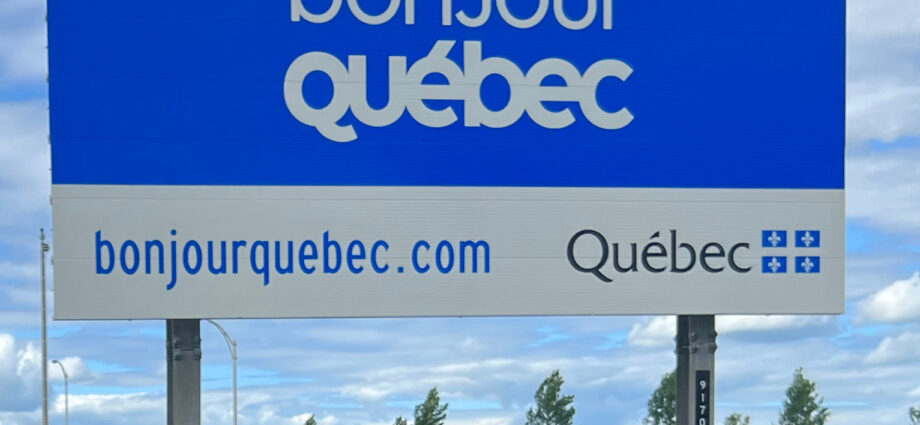
How to pronounce Quebec depends on whether you are speaking French or English; in French, Québec is roughly kay-BECK.
How to pronounce Québec in French
For an English speaker, kay-BECK is a useful approximation. Keep the first syllable short and begin it with a clean “k” sound. The second syllable ends like the English word “beck.” Written guides cannot reproduce every feature of a native accent, so think of this as a practical cue rather than a perfect transcription.
The key difference is the beginning. In French, the letters qu in Québec do not make the English “kw” sound. Saying “kway-BECK” while speaking French adds a sound that is not there. The acute accent in Québec also signals the spelling used in French. In English, the word is often written Quebec without the accent, although the accented form is also accepted.
How English speakers pronounce Quebec
English pronunciation is less uniform. Merriam-Webster’s geographic entry for Quebec gives pronunciations beginning with both “kw” and “k,” while the Collins English Dictionary entry records several British-English variants. That variety is why you may hear Canadians say something close to “kwih-BECK,” “kwuh-BECK” or “kay-BECK.”
None of those English versions is a secret test of whether someone belongs. Accent, region and the language of the conversation all affect what people say. A bilingual speaker may use the French pronunciation in a French sentence and an English pronunciation moments later in an English sentence.
Where does the emphasis go?
English speakers usually make the second syllable stronger: que-BECK. French rhythm does not map neatly onto English word stress, but visitors will be understood if they keep both syllables clear and avoid stretching the first one. If you want to practise, say “kay,” shorten it, then add “beck”: kay-BECK.
Is Quebec City pronounced differently?
The word Quebec itself does not change. In English, say “Quebec City” to identify the provincial capital rather than the province. In French, the city is normally called Québec, while the province is also Québec; the surrounding sentence supplies the distinction.
This double meaning can confuse trip planning more than pronunciation does. A reference to a hotel “in Quebec” might mean anywhere in the province, while a hotel “in Quebec City” is in the capital. Our guide to where Quebec is explains the city-versus-province distinction.
Does the accent mark change the pronunciation?
The accent helps readers identify the vowel in the French spelling, but the practical lesson for an English-speaking visitor remains simple: begin the French form with “k,” not “kw.” The accent is standard in French writing. English publications commonly omit it, so seeing Quebec and Québec does not mean you have found two different places or two unrelated names.
When typing a postal address or searching online, either spelling will normally return the right result. In polished French copy, use the accent. In an English sentence, follow the publication’s style and stay consistent.
What should a visitor say?
If you are speaking French, use the hard-k French form. If you are speaking English, use the version that comes naturally; people in Quebec City will understand it. Making a respectful effort matters more than imitating an accent. You can also listen to the audio buttons in the dictionary entries above and compare the recorded variants.
Common pronunciation mistakes
- Adding “city” in French: French speakers say Québec, not “Québec City.”
- Using “kw” in a French sentence: start with a hard “k” instead.
- Overstretching the first syllable: keep the word compact and put the clearest emphasis near “beck.”
- Assuming there is only one English accent: reliable dictionaries document more than one accepted form.
For another useful language detail, see how to abbreviate Quebec. If you are curious about everyday Quebec French, our explainer on what “esti” means adds cultural context.
Discover more from Quebec City 101
Subscribe to get the latest posts sent to your email.