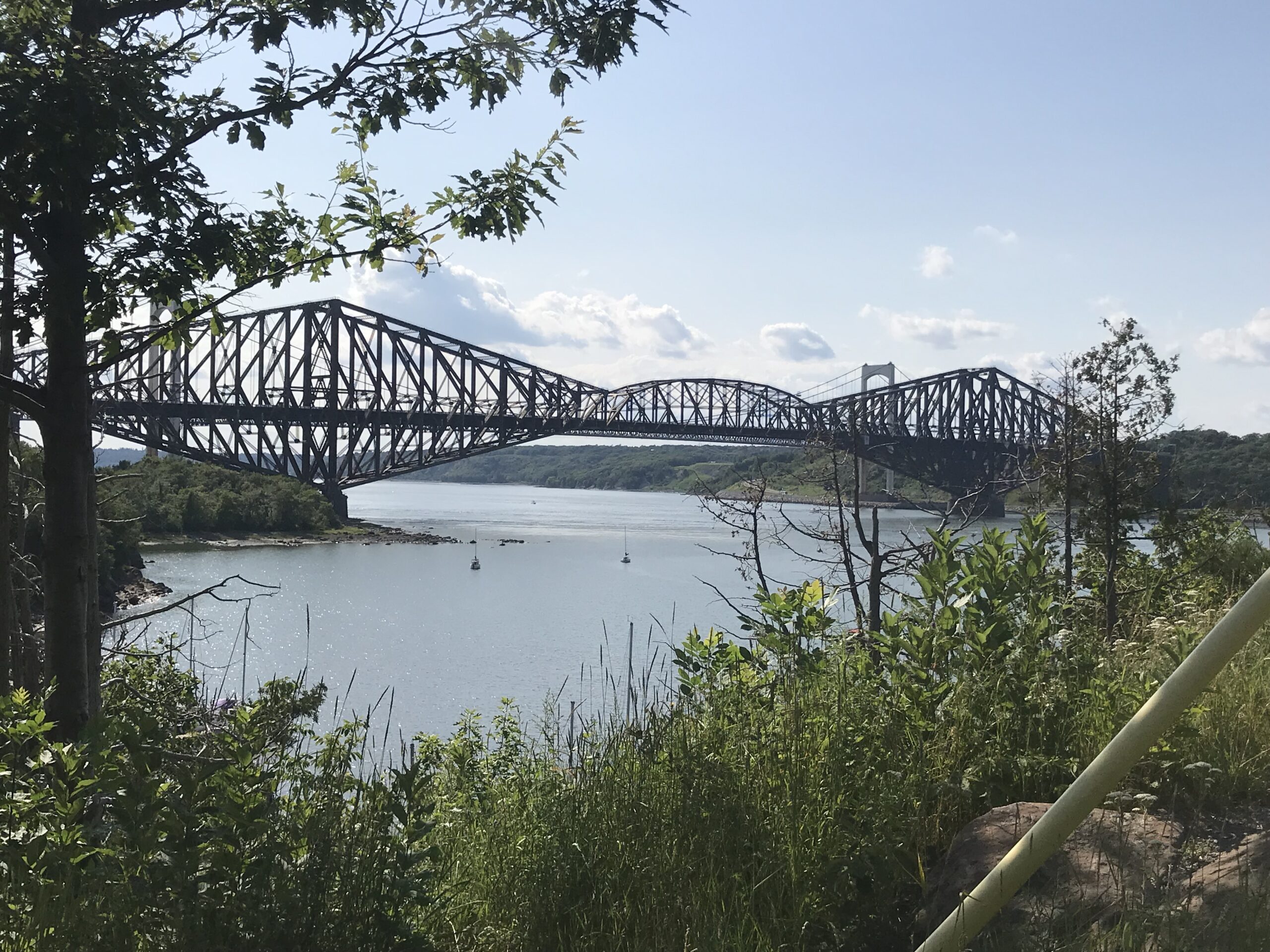
The Quebec Bridge is an engineering landmark with a difficult history: two construction collapses, 89 worker deaths and a record-setting cantilever span.
It collapsed twice before completion. Eighty-nine workers died. The finished bridge became an international engineering landmark, but its achievement cannot be separated from the cost of getting it built.
The longest clear-span cantilever bridge
The Quebec Bridge crosses the St. Lawrence River west of central Quebec City. Its main span stretches 549 metres between the piers, and the complete bridge is approximately 987 metres long.
It remains the cantilever bridge with the world’s longest clear span. That record sounds abstract until you see the structure from the riverbank and realize how much steel is hanging over moving water.
Why was the bridge needed?
Railways had transformed Canada, but the St. Lawrence remained a major obstacle at Quebec City. A permanent crossing promised a more direct rail connection between the north and south shores and a stronger link within the national transportation system.
The river’s width, depth, ice and shipping requirements made the project exceptionally difficult. Engineers selected a cantilever design that could span the navigation channel without filling it with closely spaced piers.
The 1907 collapse
On August 29, 1907, the unfinished south arm collapsed into the river. The failure happened rapidly as workers were nearing the end of the day’s shift.
Seventy-six workers were killed, including 33 Mohawk ironworkers from Kahnawà:ke. The loss devastated families and the community, which already had generations of expertise in high-steel construction.
Investigators identified fundamental design and engineering failures. Members of the construction team had observed deformation in structural members, but the warnings did not stop the work in time.
The disaster became a brutal lesson in professional responsibility: impressive calculations and ambitious schedules mean very little if warning signs are dismissed.
The 1916 collapse
The bridge was redesigned and construction resumed using a stronger plan and nickel-alloy steel.
On September 11, 1916, workers were lifting the enormous central span into position when it fell into the St. Lawrence. Thirteen men were killed.
This second failure was different from the first. The main cantilever arms remained standing, but a problem in the lifting system caused the suspended span to fall. The dropped section still lies in the river.
Completion and opening
A replacement central span was successfully installed in September 1917. The first locomotive crossed the completed bridge the following month, and the formal inauguration took place in 1919.
The finished structure was an engineering triumph, but describing it only that way would erase the workers who died during its construction.
Were Canadian Iron Rings made from the bridge?
Canadian engineers receive an Iron Ring as part of a private ceremony emphasizing professional duty and humility. The Quebec Bridge disasters are often linked symbolically with that tradition.
A persistent story says the original rings were made from steel recovered from the collapsed bridge. The organization responsible for the ritual says that story is a myth. The symbolism is real; the recycled-bridge-metal claim is not.
The Quebec Bridge today
The bridge carries rail traffic, road vehicles and people using the pedestrian and cycling walkway. It was designated a National Historic Site in 1995, and the Government of Canada reacquired it in 2024. The Canadian Register of Historic Places documents its national significance and engineering record.
For visitors, the bridge is best understood from viewpoints that reveal its scale rather than through a quick glimpse from a car. The nearby Pierre Laporte Bridge may carry more highway traffic, but the older Quebec Bridge is the structure with the record and the history.
For a slower and far more scenic crossing, our Quebec–Lévis ferry guide explains how to see the skyline from the river.
Why the bridge matters
The Quebec Bridge represents extraordinary engineering, catastrophic failure and the obligation to learn from both.
It deserves admiration. It also deserves honesty. The record span is impressive, but the most important number attached to the bridge is 89—the workers killed before it was completed.
To see how the bridge fits the city’s larger defensive and engineering landscape, continue with our guide to the Quebec City walls.
Discover more from Quebec City 101
Subscribe to get the latest posts sent to your email.