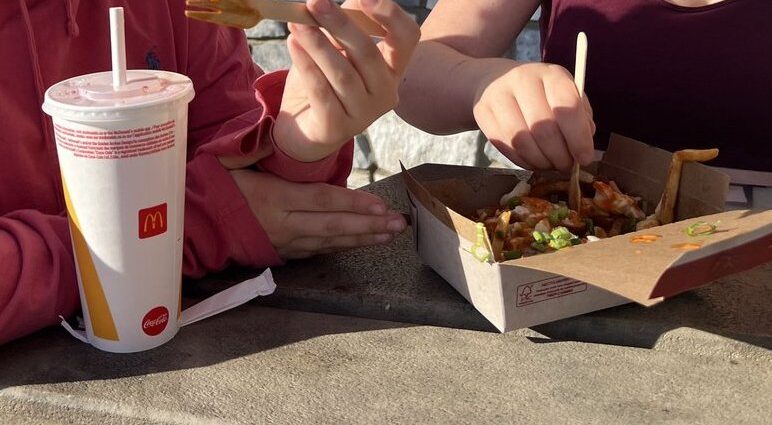
Spend enough time in Quebec and somebody will eventually suggest going to McDo. They are not introducing you to a local chef named Michel Donald. They mean McDonald’s.
McDo is the ordinary French nickname for the fast-food chain. It is short, convenient and so common that McDonald’s uses it in its own French-language marketing.
What McDo means and how to say it
It is simply a clipped version of McDonald’s. In conversation, “On va au McDo?” means roughly, “Are we going to McDonald’s?” or “Want to go to McDonald’s?” The article matters in French: people commonly say au McDo when going there and le McDo when referring to a particular restaurant.
The word is pronounced approximately Mac-doh. The final do is a clean French syllable, not “doo” and not the English word “dough” performed with theatrical enthusiasm. Listen for it in ordinary conversation and the rhythm becomes obvious quickly.
Is the nickname uniquely Quebecois?
No. McDo is also widely used in France and elsewhere in the French-speaking world. Quebecers did not hold an emergency language meeting and decide that McDonald’s needed a new identity.
The abbreviation simply fits French speech. French frequently shortens familiar names and phrases, especially in casual conversation. Once enough customers used McDo, the company sensibly adopted the language its customers were already using. The French-language McDonald’s Canada site currently labels part of its navigation “Plus sur McDo,” direct evidence that the nickname is commercially recognized rather than an outsider’s guess.
That makes the word both informal and official enough for advertising. You will hear it in normal speech, see it in headlines and encounter related branding such as the MonMcDo rewards program.
McDonald’s uses McDo itself
This is not just a nickname outsiders have documented after hearing Quebecers talk. McDonald’s Canada uses McDo on its own French-language site, including navigation such as “Plus sur McDo” and branding such as MonMcDo. Its French delivery pages also use the name in references to the McDo Canada app.
The company even used McDo in 2026 Quebec campaign language around Breakfast Poutine. That makes the safest explanation simple: McDo is established French-language usage that is especially familiar in Quebec, but it is not exclusive to Quebec.
What visitors may notice at a Quebec McDo
The basic experience is familiar, but the language of the menu is French and some items or promotions vary by region. A Joyeux Festin is a Happy Meal, while familiar product names sit inside French descriptions. Staff in tourist areas may understand English, but ordering politely in French is never a bad idea.
The most obvious local curiosity is poutine. Yes, McDonald’s sells it in Canada, and the current Quebec menu can include regional variations. No, that does not settle the question of where to find Quebec’s best poutine. Our guide to McDonald’s poutine in Canada explains what you receive and how it compares with the basic idea of the dish.
Should visitors use the nickname?
Absolutely, if it comes naturally. McDo is not restricted slang, an insult or a political password. Quebec’s language politics are real and important, but not every abbreviated lunch plan is a declaration of cultural resistance. Most people say it because it is the familiar French name and everyone understands it.
The distinction matters because visitors sometimes treat every Quebec expression as if it requires a constitutional seminar. Sometimes a hamburger is just a hamburger. Say “Mac-doh,” use the word without making a performance of it, and move on with your day.
Learning the nickname will help you follow local conversation. It will not make the fries healthier or the ice-cream machine more dependable, but language cannot solve every problem.
For another expression visitors hear in Quebec, read the meaning of tabarnak.
Discover more from Quebec City 101
Subscribe to get the latest posts sent to your email.