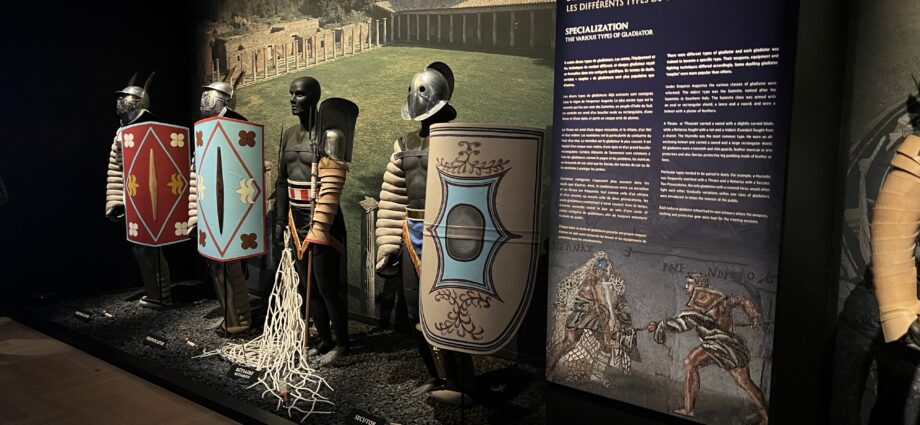
Archive notice: Gladiators: Heroes of the Colosseum ran at Quebec City’s Musée de la civilisation from June 21 to September 22, 2024. The temporary exhibition has ended, so this page preserves a past visit rather than advertising a current show.
What the exhibition tried to explain
The show used artifacts, reconstructed equipment, large figures and immersive presentation to examine Roman gladiators beyond the simplified images created by modern movies. Combat mattered, but the larger story included training, social status, spectacle, religion, material culture and the economics of the arena.
That broader frame is important because “gladiator” did not describe one uniform fighter. Roman spectacles used recognizable categories with different armour, weapons and tactical expectations. Pairings were designed to create contrast and suspense for an audience that understood the conventions.
More than a story about fighting
Gladiators occupied a complicated social position. Many were enslaved people, prisoners or individuals with limited control over their lives, while some entered voluntarily. Successful fighters could become famous, but celebrity did not erase the violence or unequal power behind the institution.
The arena was also a major public business. Training schools, promoters, craftspeople, animal handlers, food sellers and political patrons all participated in spectacles that communicated wealth and authority. Looking at helmets, protective equipment and images of performers helps connect the dramatic contests with that wider system.
How the museum made the subject accessible
Reconstruction and interactive interpretation gave visitors ways to think about weight, movement and tactics without reducing the entire topic to weapons. Large visual elements helped families understand the scale of the Colosseum, while archaeological objects anchored the spectacle in surviving evidence.
A good exhibition on ancient Rome also asks visitors to separate evidence from entertainment. Popular films frequently compress timelines, invent individual biographies and present every contest as a fight to the death. Museum interpretation can be dramatic while still showing where historians rely on inscriptions, artwork, architecture and excavated material.
What visitors should understand now
The Quebec City presentation closed in September 2024. Its title may continue to appear in search results and old event calendars, but the show is no longer part of the museum’s current program. Visitors should not purchase travel or museum tickets expecting to see it.
Check the Musée de la civilisation’s current and upcoming exhibitions for what is actually on view. Programs change throughout the year, and temporary galleries can close between installations.
Planning a Musée de la civilisation visit
The museum remains one of Old Quebec’s major indoor attractions and is especially useful on a cold or rainy day. Exhibition language, family activities, accessibility and ticket conditions can vary, so use the museum’s official pages close to your visit rather than relying on details from this 2024 archive.
For location, timing and a broader description of the museum, see our Musée de la civilisation guide. The lasting value of the gladiator exhibition was not simply its armour and dramatic figures; it was the invitation to see Roman spectacle as a social system shaped by power, labour and public appetite.
For broader museum planning after this temporary show, start with our Quebec City things-to-do guide.
Discover more from Quebec City 101
Subscribe to get the latest posts sent to your email.